What is a landing page conversion? A 2026 guide to rates and benchmarks
What a landing page conversion is, how to calculate your rate, what counts as good in 2026, and the changes that lift the number fastest.

Kael
Kael is an editor and content strategist covering AI tools, website creation, and online growth. Interested in how people build and share on the internet, Kael writes practical content around digital products and modern web experiences.
Your landing page has one job. If it doesn't currently, it should. When someone arrives intrigued from an ad, an email or a search result, the page asks them to do a single thing, like submitting the form, booking the slot, starting the trial, or buying the product. A landing page conversion is what we call it when they take that action.
Divide the completions by your total visitors, multiply by 100, and you have your landing page conversion rate.
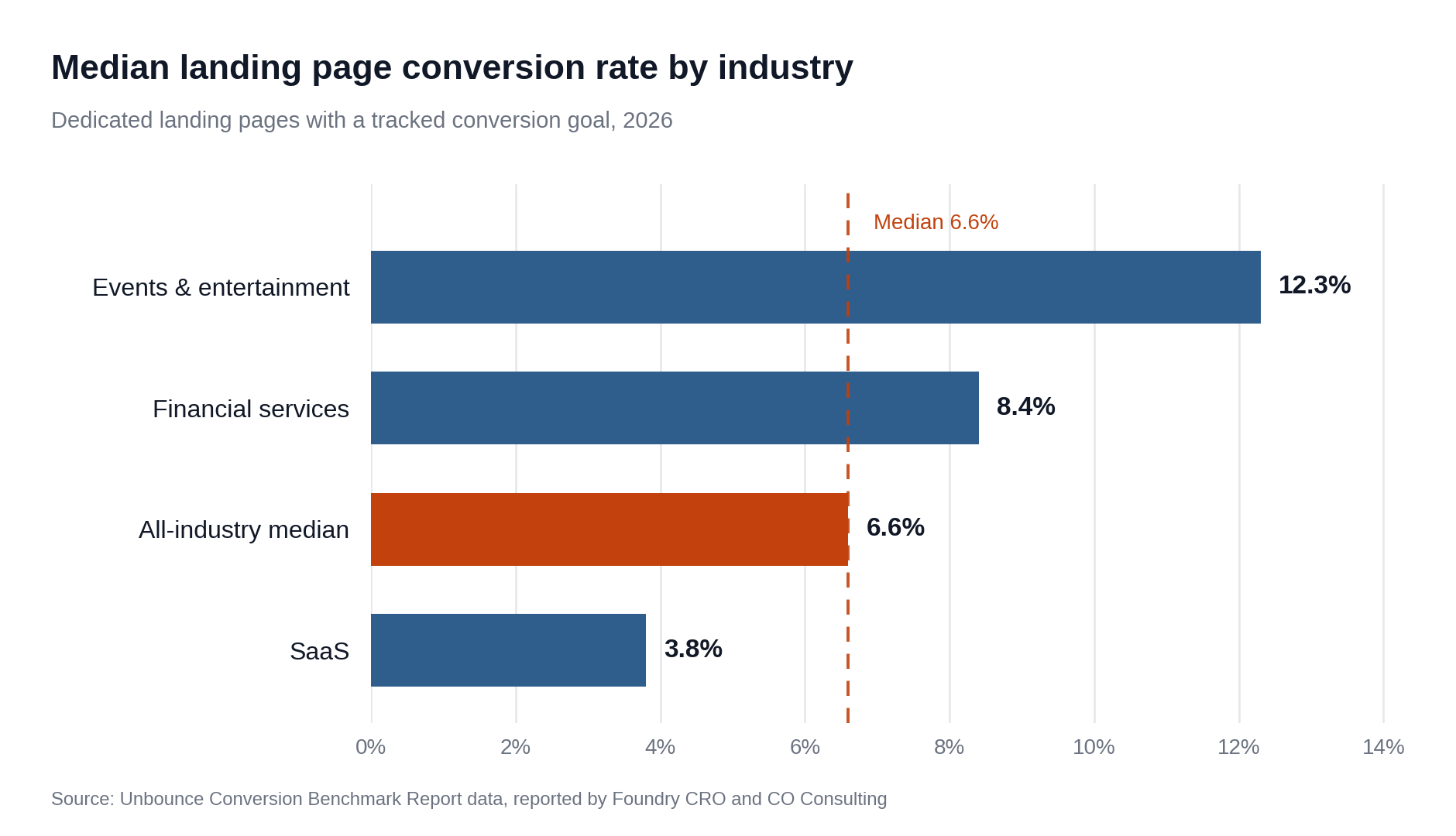
Unfortunately, published benchmarks vary more than you'd expect. Fortunately, the variation is informative. Unbounce's Conversion Benchmark Report puts the median at 6.6%, drawn from 57 million conversions across 41,000 landing pages (CO Consulting). Inside that same dataset, SaaS pages sit at 3.8% and events pages at 12.3% (Foundry CRO). A 4% rate reads as average performance in SaaS and as something to look at in events.
Your own industry figure, paired with your own conversion action, is the comparison that will tell you where you stand.
Quick answer: a landing page conversion is one visitor completing the single action a page was built to get, such as a form submission, a booking, a trial signup or a purchase. Your landing page conversion rate is conversions divided by visitors, multiplied by 100. The all-industry median is 6.6% (CO Consulting), and a rate beating your own sector's median counts as good.
What is a landing page conversion?
A landing page conversion is one visitor completing the single action your page exists to get. The form submission, the booking, the trial signup, the purchase, the download. Most pages have a clear candidate for that action, and it's usually the thing you'd celebrate if it happened a hundred more times this month.
Two details make that useful. The action has to be deliberate, so scrolling to the bottom doesn't count. And there should only be one per page, since a page tracking four actions gives four numbers that move independently and none telling you if the page works.
Plenty of pages pick up extra actions over time. A newsletter box gets added, then a chat widget, then a link back to the blog, and the reporting fills with events nobody planned for. Picking your primary conversion and reporting it consistently takes about ten minutes.

Landing page conversion vs website conversion
A landing page conversion measures one action on one page. A website conversion measures any tracked action across your whole site, which usually averages several different goals together.
The difference shows up in how you use each number. Site-wide conversion tells you about your traffic quality and your brand's pull. The page-level figure gives you something you can act on this week, since the page is small enough to change and the traffic reaching it is defined.
It also explains one of the bigger gaps in published data, where dedicated landing pages show a median around 6.6% and broader measures of general website pages land nearer 2.35% (Digital Applied).
Landing page conversion examples by business type
The conversion action changes with what you sell, so here are a few examples.
Local service businesses count booked appointments or quote requests. A physiotherapy clinic running ads for sports massage wants the booking, and everything else supports it.
B2B software counts demo requests, trial starts or completed signups. The conversion sits further from revenue here, so most teams also track how many trials reach a qualified sales conversation.
E-commerce counts completed purchases, or add-to-cart where checkout happens elsewhere. Pick one and keep it, since switching mid-quarter makes your trend line meaningless.
Events and hospitality count registrations, table bookings or ticket sales. These report the highest rates in benchmark data, since the ask is small and the intent is high.
Coaching, courses and digital products count webinar registrations, waitlist signups or downloads. Low-commitment actions convert several times better than a direct sale here, which is why funnel stage changes what a good number looks like.
How to calculate your landing page conversion rate
Your landing page conversion rate is the number of conversions divided by the number of visitors, multiplied by 100. Use this formula:
Landing page conversion rate = (conversions ÷ visitors) × 100
A page with 2,400 visitors and 96 bookings converts at 4%. Most analytics platforms do the arithmetic for you once the goal is set up correctly.
The part that trips people up is the denominator. Sessions, users and unique visitors give three different numbers from the same month, and each is defensible. Pick one, write it down somewhere your team can see, and apply it everywhere. A rate that looks like it improved because someone switched from sessions to users will send you off optimizing something that was already fine.
Keep the data source consistent too. Ad platforms count a conversion when their attribution model credits the click, and your analytics counts it when the event fires on the page. Those two numbers will disagree, sometimes by 20% or more. Neither is broken, so compare each against itself over time.
What is a good landing page conversion rate?
A good rate beats the median for your industry, measured with the same conversion action. Across all industries that median sits at 6.6% (CO Consulting), the top quarter of pages reach 11.45% or higher (Digital Applied), and HubSpot puts the working benchmark for a well-built page at about 10% (HubSpot).
Underneath the average, the spread is wide. Financial services pages report a median of 8.4%, SaaS pages 3.8%, and events and entertainment pages 12.3% (Foundry CRO). A SaaS team hitting 5% is doing well. An events business at 5% has money sitting on the table.
Traffic source moves the number as much as industry does. Email converts at around 19.3%, the highest of any channel, because those visitors already know you (Genesys Growth). Cold paid social sits far lower on the same page with the same offer, so segment by source before comparing yourself to anything.
Why conversion rates vary so much
Rates vary because the size of the ask varies. A visitor giving an email address for a checklist has risked almost nothing. A visitor entering card details for an annual subscription has made a real decision, and far fewer do it on a first visit.
A few other things move the number before you've changed a single word on the page.
Purchase complexity is the big one. SaaS pages convert below the median partly because software buying involves several people and a procurement step. Events pages convert above it because one person decides, and decides quickly.
Funnel stage comes next. A page built for people who have never heard of you converts lower than a retargeting page shown to visitors who read your pricing last Tuesday. Both can be performing well.
Then there's device mix. Desktop pages convert at 6.3% against 4.1% on mobile, a gap of roughly 35% (Colorlib), and mobile brings most of the traffic. A page weighted toward mobile reports a lower blended rate than a desktop-weighted competitor with identical design.
What factors influence landing page conversion rate?
Seven factors influence a landing page conversion rate more than anything else: message match, offer clarity, page speed, form length, the call to action, social proof and traffic quality. They're in rough order of how much difference they tend to make.
Message match does the heaviest lifting. Your headline should repeat the promise that got the click, so somebody who clicked an ad for emergency boiler repair wants those words on the first screen. Pages drifting into general brand messaging lose people in seconds.
Offer clarity comes second. The visitor should be able to say what they're getting, what it costs and what happens next, without scrolling twice. Pages written at a fifth to seventh grade reading level convert at 11.1%, against 5.3% for pages pitched at college level (Shno).
Page speed has the most predictable payoff of the seven. Google and Deloitte tracked 30 million mobile sessions across 37 brands and found a 0.1 second improvement lifted retail conversions by 8.4% and travel conversions by 10.1% (Google). Portent's data puts pages loading in under a second at 31.79% (Blogging Wizard). The work is usually technical and the result arrives quickly.

Then there's form length, which people underestimate. Three-field forms convert at 10.1% against 3.6% for nine-field forms (Digital Applied). Ask for what you need to make first contact, and gather the rest later.
Your call to action wants to be one action, repeated down the page, in language describing what the visitor gets. Pages built around a single call to action average 13.5%, and stripping the navigation menu doubles a page's conversion rate (Blogging Wizard). A button reading "Book my free assessment" outperforms one reading "Submit", and a page offering three competing choices makes it easy to pick none of them.
Social proof earns its space. Pages including it in the copy convert at 12.5% against 11.4% for pages without (ZoomInfo), and HubSpot found that sitting it directly under the call to action can lift a page by 68% (LanderLab). Named customers with specific outcomes carry more weight than star ratings, particularly in B2B.
Traffic quality sits underneath all of it. The best page in your industry converts badly when the arriving traffic has the wrong intent, so when a rate drops and the page hasn't changed, look upstream at your targeting or keyword match types.
How to increase your landing page conversion rate
Improving the number is a sequence of small, testable changes applied in order of expected impact. Start with message match and form length, move to speed and proof, and leave color and layout experiments until the structural work is done.
Build a conversion-focused landing page workflow
Define the audience and the one action
Write down who the page is for, what they get, and the single action you want, one sentence each. This becomes the reference you check later decisions against, and it stops the page accumulating extra jobs three weeks after launch.
Build the first version
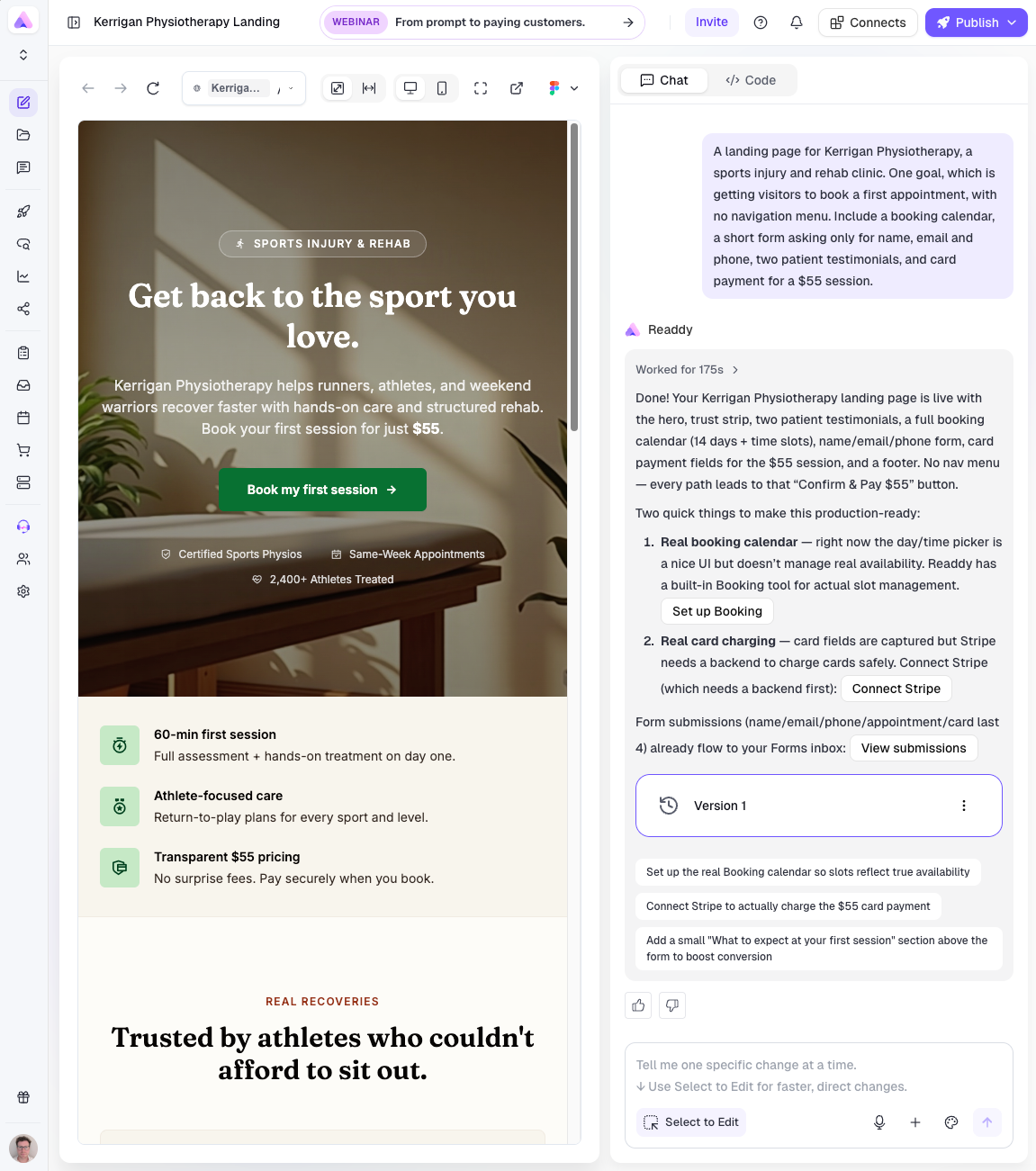
Get something live quickly, because a real page with real traffic teaches you more than another round of internal review. Some teams start from a wireframe, some from a template, and some describe the page in plain language and let an AI builder produce the first draft.
Readdy works exactly this way. You can build a website from text with AI by describing the offer and the audience, build a website from a screenshot of a layout you like, or paste the URL of an existing page to bring it in as an editable project. There are over 500 templates for beginners to start from if you'd rather pick a layout and edit it.
Changes happen by asking the AI for them or by clicking the element you want to change, so the first version stays a same-day job for a marketer with no developer time available.
Connect the form and the payments
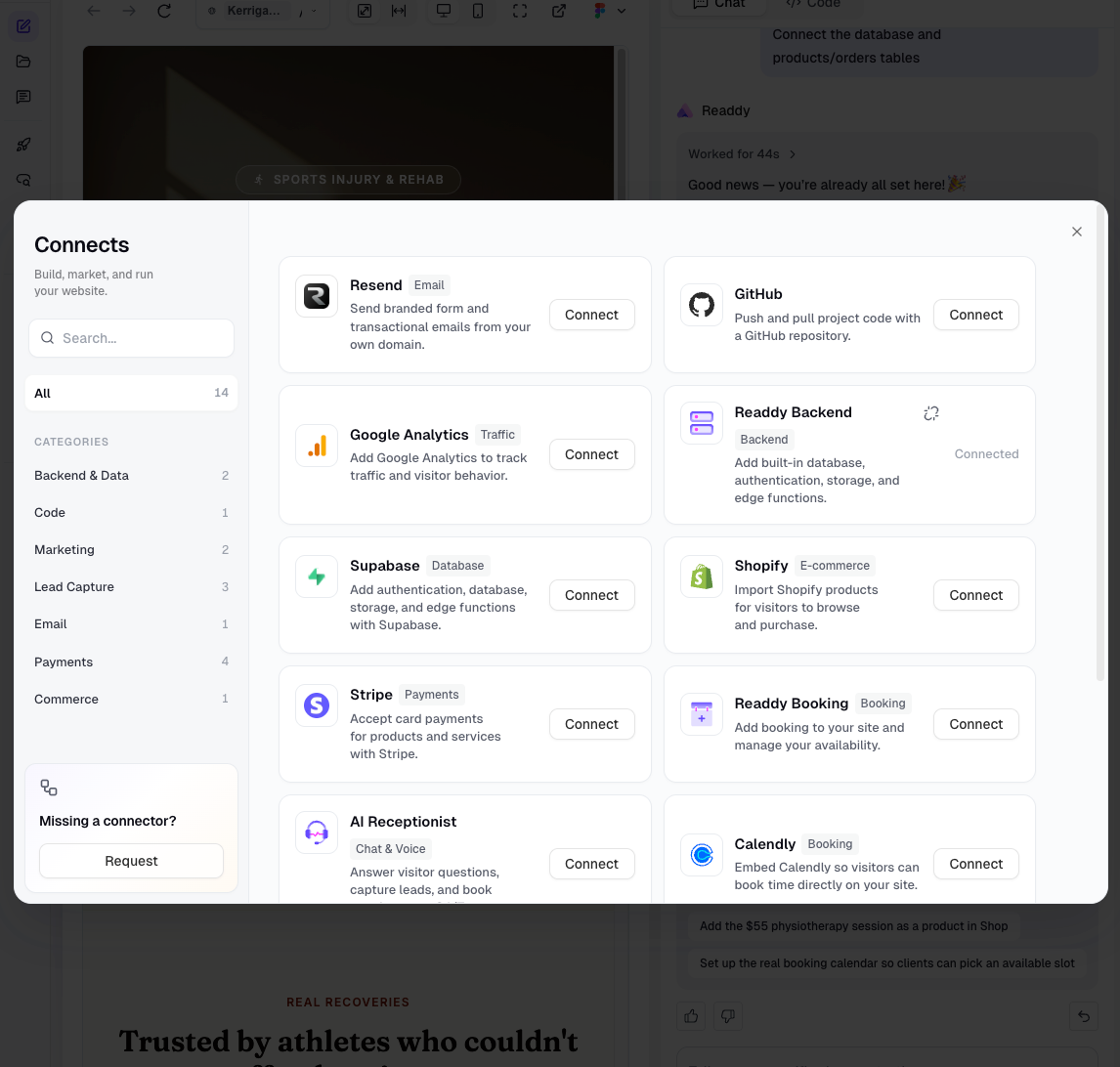
The conversion action needs somewhere to go: a form writing to a database you can query, a booking tool holding real availability, a payment method that works on mobile, and analytics recording the event.
Assembling those from separate services is where most launches slip. A no-code AI website builder with a built-in backend handles the database, authentication and server functions natively, so bookings and payments arrive as part of the page and there's nothing separate to maintain. That's the difference between a page that looks finished and one that can take a deposit on a Sunday night.
Launch with SEO and GEO covered
Search now includes AI answer engines, and both reward much the same work. Give the page a clear H1 and a direct answer near the top, keep the metadata clean, and publish a sitemap search engines can read. Readdy generates that structure as part of the build and publishes to Google Search Console in one click, with the ai website generator surfacing SEO and GEO suggestions as you work, without being asked for them.
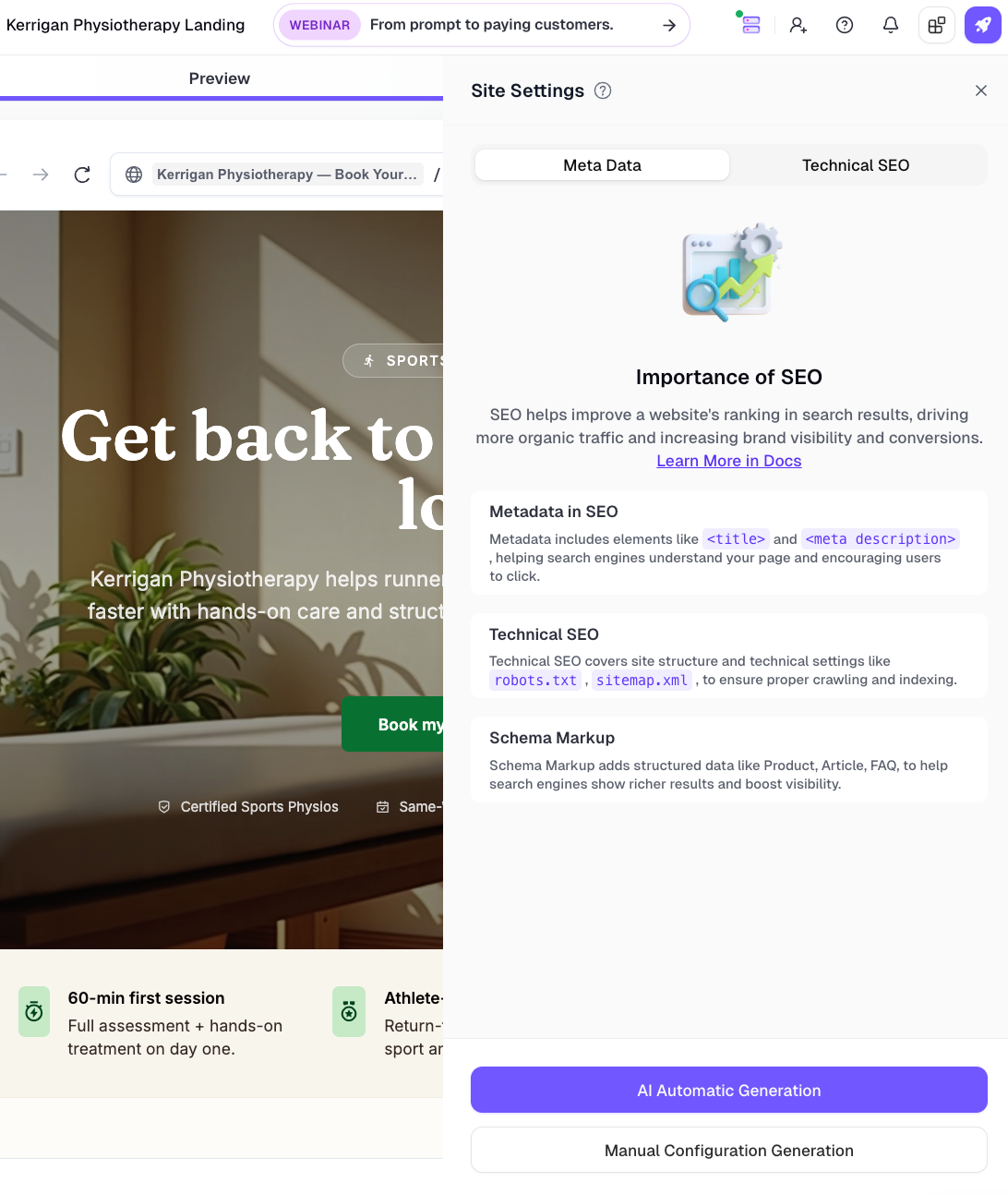
Connect a domain, publish, and check the page on a phone before sending traffic to it.
Diagnose before you test
Look at the data before choosing what to change. Segment by traffic source, device and ad group, and the weak spot usually announces itself. A page converting at 7% on desktop and 1.5% on mobile has a mobile problem, and no amount of headline testing will fix it.
Only 17% of marketers A/B test their landing pages, while testing produces average gains of around 37% (Foundry CRO). Test one change at a time, give it enough traffic to mean something, and record what you learn.
Landing page conversion strategies by use case
For beginners and small businesses
Build one page for your best offer and get it live this week, with the form kept to name, email and phone, and two customer quotes carrying full names. Review monthly, and resist redesigning until you have a few hundred visitors to learn from.
For marketing and growth teams
Build a page per campaign and per audience segment, since message match is the biggest lever you have and generic pages waste it. HubSpot found companies running 40 or more landing pages generate around 12 times the leads of those running five or fewer (Colorlib), and most sit closer to ten. Run one structured test per page per month, hold your denominators steady, and keep a shared log so the same test doesn't get run twice.
For developers and advanced teams
Push on speed, then on personalization by source. Server-side tracking gives cleaner data than tag-based setups, and exporting your page code keeps open the option of moving it into your own stack later. Readdy exports the full project as HTML, React, Vue or Figma, and syncs with GitHub, which suits teams wanting the generation speed early and full ownership of the code afterwards.
How to choose landing page tools
Pick the landing page tool that gets a working page in front of real traffic soonest, given the skills on your team this month. Three categories cover most situations.
Dedicated landing page platforms give you strong testing tools, which suits teams running many campaigns at once. A website builder makes more sense when the page needs to sit alongside the rest of your site and share its branding. Custom development gives complete control, at the cost of time and a developer's availability.
When an AI website builder is the right choice
An AI website builder suits teams with no developer who need a page live this week, particularly when the conversion action involves bookings, payments or logins.
The website generation speed is the obvious draw. But being able to edit later is also very nice, since changing a headline by asking for it takes seconds, and pages that are easy to change get changed and improved more often. Readdy includes hosting, domain connection, analytics and code export as standard, and as an AI website builder for small businesses it starts with a free plan, so you can build a page and put traffic through it before committing to anything.
Frequently asked questions
What counts as a landing page conversion?
A landing page conversion is a visitor completing the single action your page was built to get, such as submitting a form, booking an appointment, starting a trial, making a purchase or downloading a resource. Scrolling, clicking a menu item or spending time on the page are engagement signals, and counting them alongside real conversions will distort your rate.
What is a good landing page conversion rate?
A good rate beats your industry median using the same conversion action. Across all industries the median is 6.6%, with the top quarter of pages at roughly 10% or higher (CO Consulting). Financial services averages 8.4% and SaaS 3.8%, so compare against your own sector before you use the overall figure.
Why is my landing page conversion rate low?
Check message match first, since a headline that fails to repeat the promise in your ad loses people within seconds. Then look at form length, mobile performance and page speed. Segmenting by traffic source usually identifies the problem quickly, because one underperforming channel can drag a healthy blended rate down.
How often should I test my landing page?
Run one structured test per page per month, and let each test gather enough traffic to produce a result you can trust. Testing more frequently on low-traffic pages produces noise. Between tests, review your segmented data monthly so the next test targets the weakest part of the page.
Do I need a developer to build a high-converting landing page?
No. Modern builders handle layout, hosting, forms, payments and SEO configuration without code. An AI-powered website builder will generate a working page from a description of your offer, and you can edit it by asking for changes in plain language or clicking the element you want to adjust.
Key takeaways
- A conversion is one visitor completing the single action your page exists to get, and your rate is that count divided by visitors, multiplied by 100.
- The all-industry median is 6.6%, with SaaS at 3.8% and events at 12.3%, so your sector figure is the only comparison telling you anything useful (Foundry CRO).
- Keep one primary conversion per page and one consistent denominator, or your trend line measures your reporting choices as much as your page.
- Message match, form length and page speed move the number faster than design changes.
- Segment by traffic source and device before testing, since the fix is usually specific to one segment.
Kael
Kael is an editor and content strategist covering AI tools, website creation, and online growth. Interested in how people build and share on the internet, Kael writes practical content around digital products and modern web experiences.