






Best rank tracker tools in 2026: Google, local, and AI search rankings
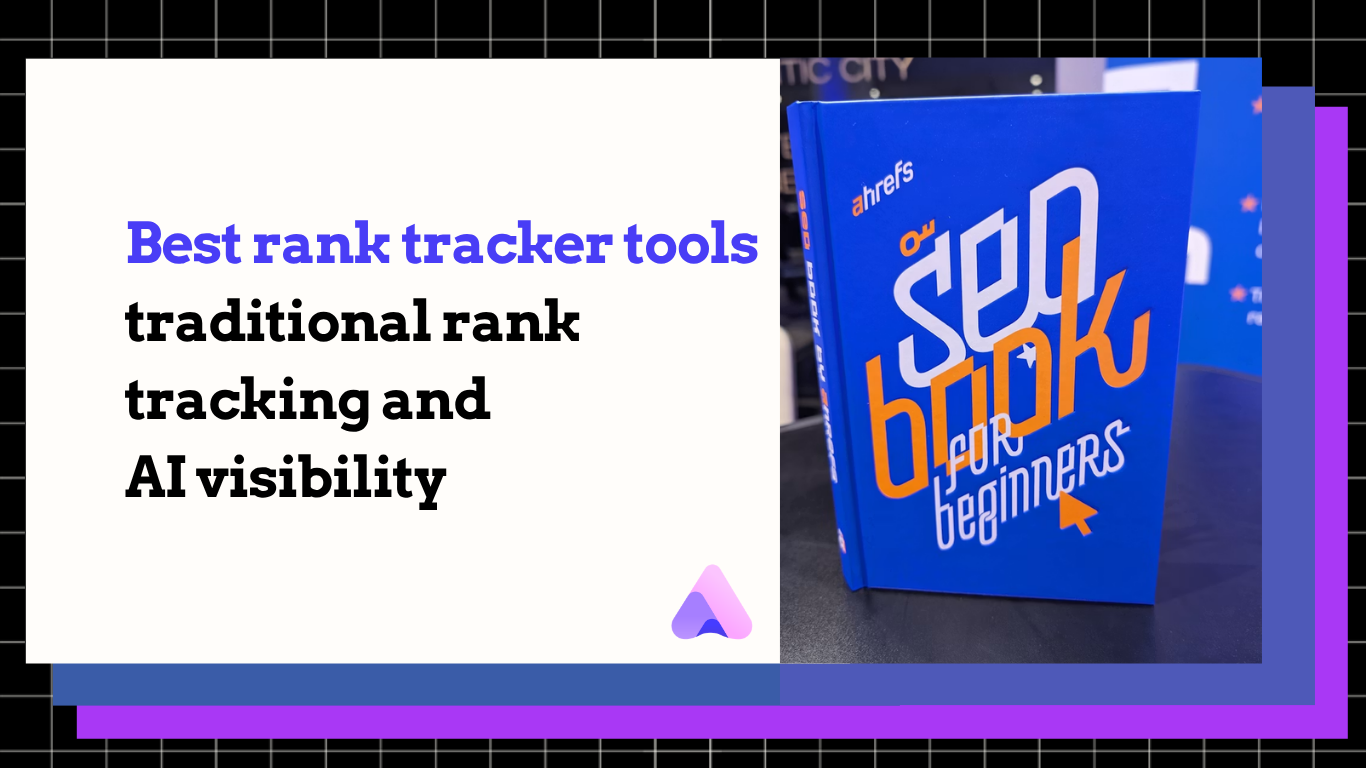
We compared the best rank trackers of 2026 for accuracy, AI search visibility, and price. See our top picks and pick the best one for your needs.

Kael
Kael is an editor and content strategist covering AI tools, website creation, and online growth. Interested in how people build and share on the internet, Kael writes practical content around digital products and modern web experiences.
The best rank tracker in 2026 is one that monitors both traditional Google rankings and AI-generated results across platforms like Google AI Overviews, ChatGPT, Claude, and Gemini. That said, the best rank tracker tool for your needs depends on your budget, use case, team size, and the level of data accuracy and depth you require.
Quick answer: SE Ranking is the best all-around rank tracker in 2026 because it combines daily Google and Bing tracking with built-in AI search visibility (ChatGPT, Gemini, Perplexity, and Google AI Overviews), and it is also more budget-friendly compared to other popular tools like Semrush or Ahrefs. However, Ahrefs and Semrush are still the strongest choices for teams that already rely on their extensive keyword and backlink databases.
AccuRanker is the right option for agencies that need fast, highly accurate daily rank updates. Nightwatch and Local Falcon lead on local SEO, and Google Search Console is the free rank tracker that every site should have running.
What a rank tracker does
What is a rank tracker?
A rank tracker is a tool that automatically shows where your website ranks for specific keywords. It monitors these rankings regularly, so you can see how your rankings change over time without checking manually.
Rank tracking is different from keyword research. A keyword research tool helps you find which keywords or terms to target, based on search volume, difficulty, and intent. A rank tracker takes the keywords you're already targeting and monitors your site’s position for them.
Most tools update rankings daily, weekly, or on demand, across devices and locations. Instead of giving you new keyword ideas, they show you what’s happening over time, so you can track progress, quickly spot drops, and see the impact of your SEO efforts.
Why rank tracking still matters
Rank tracking still matters, but the way we interpret rankings is changing. If your ranking goes up or down on search engines, it’s often the first sign that something on your site or in Google’s algorithm has changed.
However, rankings alone are no longer enough to attract traffic. According to a study published by SparkToro, roughly 68% of Google searches in the US ended without a click to any website in the first four months of 2026, with AI overviews being the major reason. But that doesn't make rankings irrelevant. It just makes them a part of a bigger ecosystem that now includes AI-generated answers as well.
A page can rank number 1 on Google and still lose traffic if an AI overview answers the query above it and uses a different site as a reference. That’s why many of the tools in our list of the best rank trackers now track AI visibility alongside traditional position data.
How we judged the best rank tracker tools
Evaluation criteria
We weighed five factors for every tool:
- Update frequency (daily, weekly, and on-demand)
- Tracking accuracy
- Local and mobile tracking depth
- Ability to track AI search visibility (ChatGPT, Gemini, Perplexity, AI Overviews) and whether it is built in or offered as an add-on
- Total cost at a realistic keyword volume rather than the cheapest tier
Real-world testing lens
Product feature pages are usually marketing-focused, so we didn’t rely solely on them for evaluating the best rank checker tools. Instead, we ranked the tools based on how they perform in real SEO campaigns.
Pricing and plan limits reflect each vendor's published pricing pages (as of July 2026). We’ve focused on pricing plans a freelancer or small agency would actually need, not the entry-level tier built for browsing a demo. Many vendors include daily updates and AI visibility only in specific plan tiers, so we’ve also considered it.
We also judged the cost per tracked keyword rather than comparing advertised prices alone. That’s because a $129 plan covering 750 keywords and a $103 plan covering 2,000 keywords offer different value.
Best rank trackers at a glance
| Factor | SE Ranking | Ahrefs | Semrush | AccuRanker | Google Search Console |
| Best use case | Best overall balance of price and AI visibility | Keyword and backlink research depth | Enterprise and multi-tool teams | Fast and highly accurate daily tracking | Free data directly from Google |
| Update frequency | Daily | Weekly on every plan | Daily across all paid plans | Daily, plus on-demand refresh | Continuous, with a short reporting lag |
| Accuracy | Consistently reliable | High on desktop | Reliable | Very high (98–99% reported accuracy for top-20 positions) | Highly accurate since it is first-party data directly from Google |
| Local & mobile tracking | Google, Bing, Yahoo, as well as city-level and mobile tracking | City/ZIP and device tracking, limited by the weekly refresh | City/ZIP tracking, plus a dedicated Map Rank Tracker tool | Desktop and mobile tracking; not a dedicated local specialist | Device-level (mobile/desktop) and country data; no city-level or competitor tracking |
| AI search visibility | Built in (AI Overviews, ChatGPT, Gemini, Perplexity) on the Core plan | Add-on (Brand Radar), separate per-index fee on top of a base plan | Available on the Starter plan and higher tiers | Add-on (AccuLLM) or on higher pricing tiers | None |
| Price (realistic volume) | $103.20/mo, 2,000 keywords (annual) | $129/mo, 750 tracked keywords | $165.17/mo, 500 keywords daily and AI visibility | $224/mo, 2,000 keywords | Free |
Best rank tracker by need
Best overall: SE Ranking
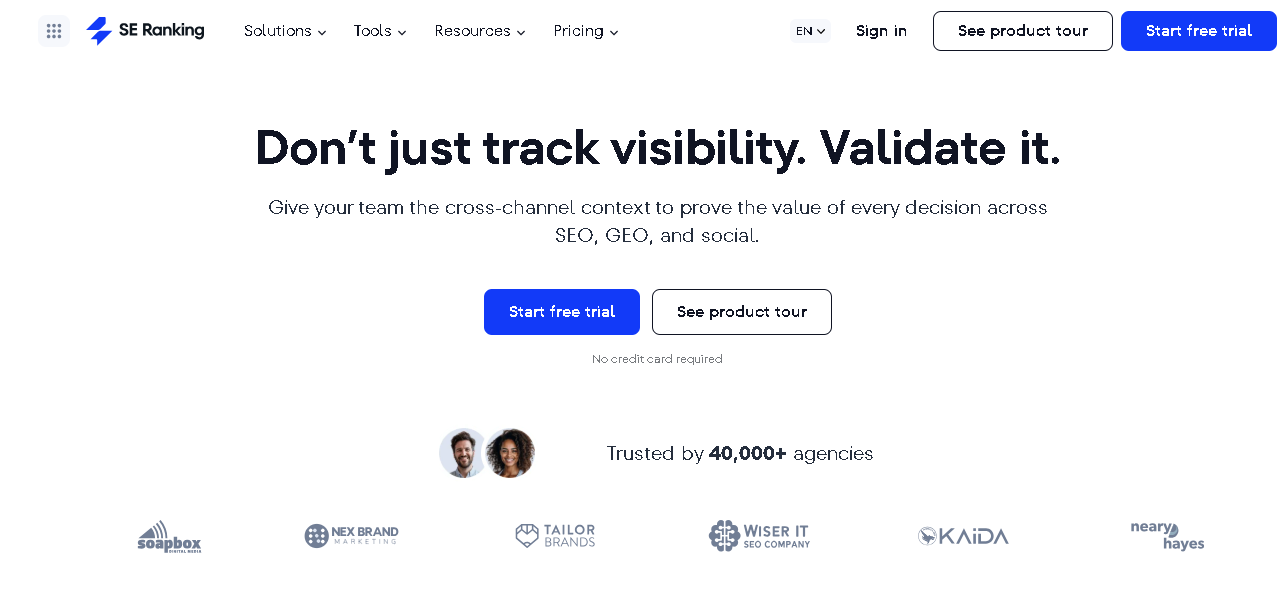
SE Ranking is the strongest overall pick in 2026 because it doesn't force you to choose between price and AI tracking features. The Core plan, priced at $103.20 a month (billed annually), tracks up to 2,000 keywords daily across Google, Bing, and Yahoo. It now also shows where your pages appear inside Google AI Overviews, ChatGPT, Gemini, and Perplexity as part of the core tracking system rather than as a paid add-on.
SE Ranking is one of the few rank trackers under $110 a month that tracks AI search visibility as a part of the plan instead of as an add-on or a separate toolkit. The platform also covers site audits, competitor research, and backlink monitoring in the same subscription, so you get a full toolkit.
White-label reporting and bulk client management are also available as add-ons, which are especially useful for small agencies and freelancers. There is also a 14-day free trial so you can test the platform before committing to a paid plan.
- Update frequency: Daily
- Accuracy: High
- Local & mobile tracking: Google, Bing, and Yahoo, plus city-level and mobile tracking
- AI search visibility: Built in on the Core plan (AI Overviews, ChatGPT, Gemini, Perplexity)
- Price at realistic volume: $103.20/mo, 2,000 keywords (annual)
Best for agencies: Nightwatch
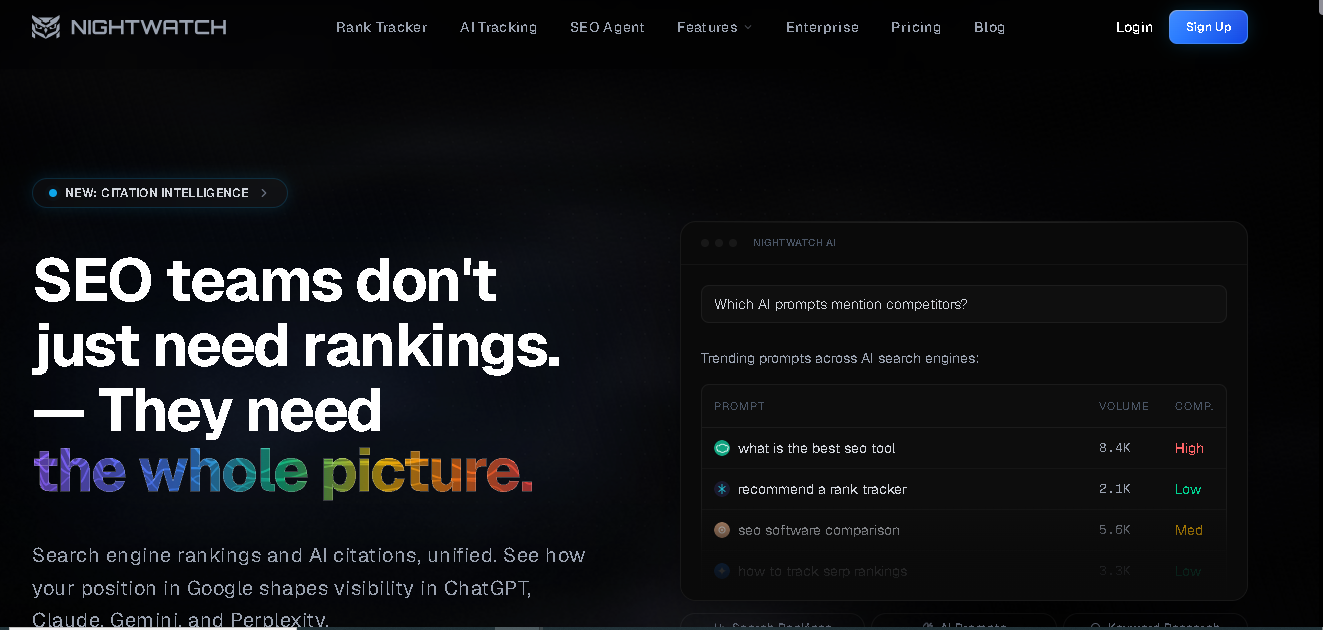
Nightwatch offers AI visibility tracking, real-time on-demand checks, and hundreds of local tracking locations in every plan, including the entry-level Starter tier. The platform covers a wide range of search engines, including Google, Bing, and Yahoo, as well as various AI platforms, including ChatGPT, Google AI Overviews, Claude, and Perplexity.
White-label reporting and unlimited user seats are also available from the Professional plan (€159 a month). These features matter a lot once you start adding account managers who only need access to reports, not additional keyword tracking. Even on the Professional plan, Nightwatch is still more budget-friendly for teams than tools like Semrush or Ahrefs, which charge extra per user.
- Update frequency: Daily, plus on-demand refresh
- Accuracy: High (99.9% self-reported)
- Local & mobile tracking: 107,000+ locations across 190+ countries
- AI search visibility: Built in on every plan, including Starter (ChatGPT, Claude, Gemini, Perplexity, AI Mode, AI Overview)
- Price at realistic volume: €79/mo, 500 keywords (Starter plan)
Best for keyword accuracy: AccuRanker
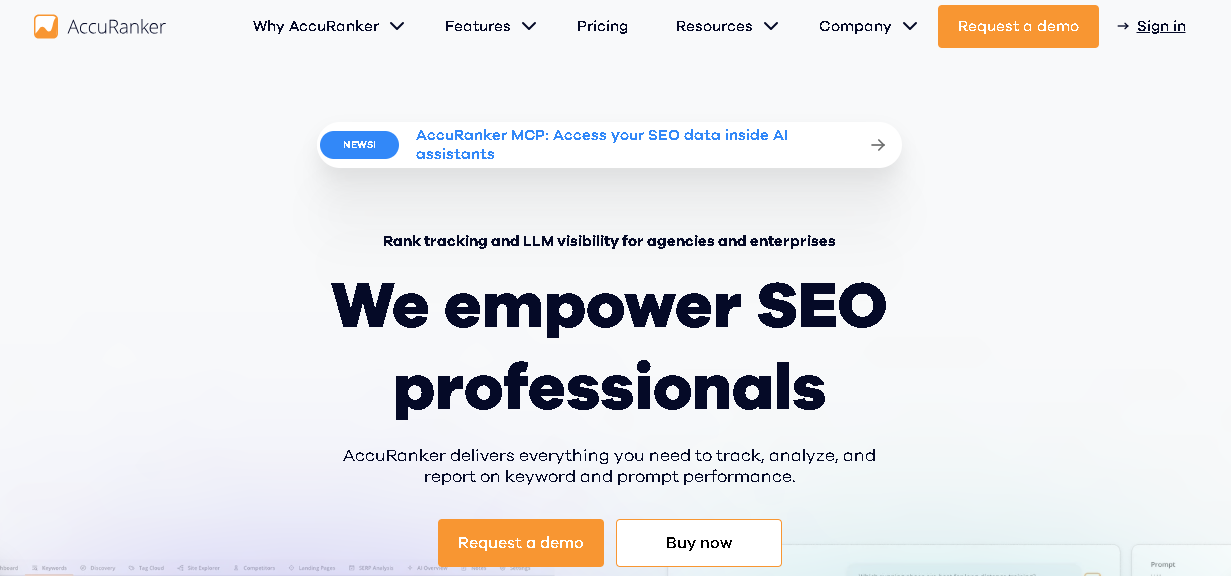
AccuRanker is the right choice when a client or campaign needs same-day certainty about a ranking change. AccuRanker is one of the few tools that offer both daily automated updates and an on-demand refresh in every plan. With on-demand refresh, you get fresh SERP data in seconds, rather than waiting for the next scheduled crawl.
While AccuRanker doesn't offer a complete toolkit with keyword research, site audits, or content tools the way SE Ranking or Semrush do, it’s great at tracking positions quickly and accurately.
The Professional plan starts at $224 a month for 2,000 keywords, with tiers scaling up to Expert at $764 a month for 10,000 keywords and custom Enterprise pricing above that. Since there's no plan below 2,000 keywords, AccuRanker is best for agencies and in-house teams running active campaigns across many keywords. It’s not a budget-friendly option for a freelancer tracking rankings for a single client's 40-keyword blog.
AccuRanker also offers AI search visibility tracking (AccuLLM), but it is available as a separate product with its own pricing tiers. At $224 a month (compared to SE Ranking's $103.20 or Nightwatch's €79/$90 ), AccuRanker is a good option when a team actually uses the on-demand refresh regularly, not just once or twice a quarter.
- Update frequency: Daily, plus on-demand refresh
- Accuracy: Very high (around 98–99% reported accuracy for top-20 positions)
- Local & mobile tracking: Desktop and mobile tracking; not a dedicated local specialist
- AI search visibility: Add-on (AccuLLM), sold as a separate pricing tier
- Price at realistic volume: $224/mo, 2,000 keywords
Best for local SEO: Local Falcon
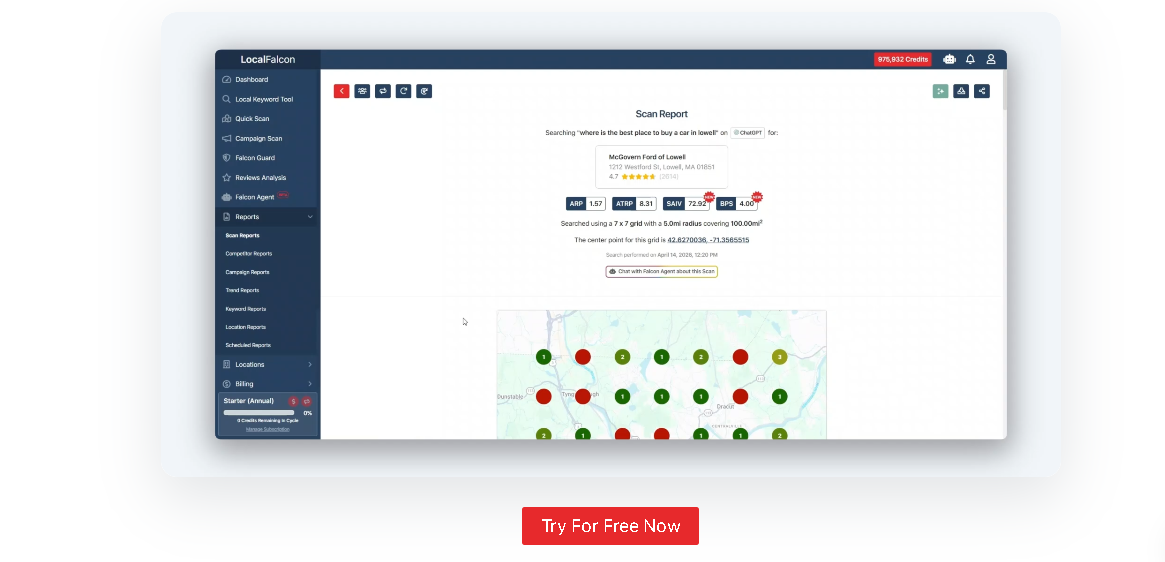
Local Falcon works differently from other tools on our list. It focuses specifically on local SEO by running a geo-grid scan that shows exactly where a business ranks on Google Maps from different neighborhoods and streets. It checks from hundreds of points spread across your service area at the same time, then creates a geo-grid showing exactly where you rank well and where you drop off.
This makes Local Falcon a great choice for multi-location businesses, franchises, and service-area businesses like plumbers, roofers, or landscapers covering a whole metro area. The tool now also tracks brand mentions inside AI Overviews, Gemini, Perplexity, and Grok for local queries.
Local Falcon’s pricing also works differently. Instead of one flat monthly fee, you buy a pool of credits, and every point on your grid uses one credit, so cost scales with how often and how wide you scan. The Starter plan costs $24.99 a month, offering 90,000 credits.
While this pricing model makes cost predictable if you scan occasionally, it can also climb faster than a flat-fee tool if you're running large, frequent scans across many locations and keywords at once.
- Update frequency: Per scan, on demand (no fixed daily or weekly schedule)
- Accuracy: Live data pulled directly from Google Maps at scan time
- Local & mobile tracking: Deepest compared to other tools in the list (up to a 21×21 grid (441 points) from real GPS coordinates)
- AI search visibility: Built in (ChatGPT, Gemini, Perplexity, Grok, Copilot, Google AI Overviews)
- Price at realistic volume: $24.99–$199.99/mo, credit-based
Best for beginners and SMBs: Mangools (SERPWatcher)
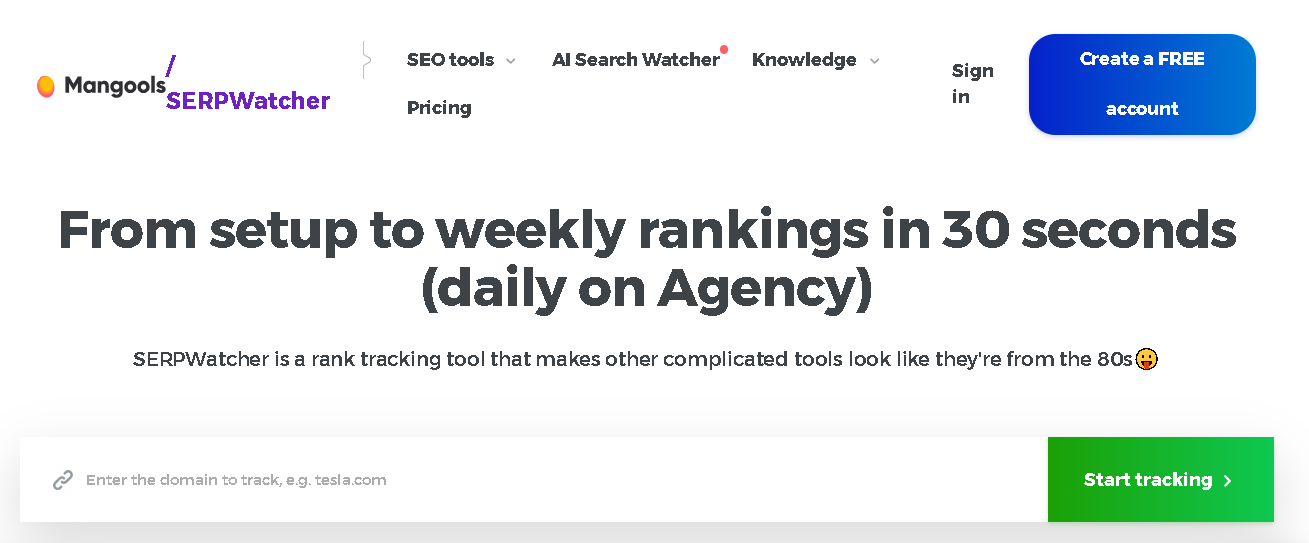
SERPWatcher, the rank tracker inside the Mangools suite, is a great starting point for freelancers and small businesses who haven’t used a paid SEO tool before. At roughly $19 a month (paid annually), it offers a full starter toolkit that a small business owner or new freelancer usually needs, including keyword research (KWFinder), SERP analysis, and backlink checking. It also offers AI search visibility tracking (ChatGPT, Claude, Gemini, Grok, and more) as part of its pricing plans.
SERPWatcher runs Rank updates weekly by default, and daily refresh is only available on the top-tier Agency plan.
- Update frequency: Weekly by default; daily only on the Agency plan
- Accuracy: Good
- Local & mobile tracking: 65,000+ locations; desktop and mobile tracked as separate keyword slots
- AI search visibility: AI Search Watcher (tracks AI search visibility) is bundled into SERPWatcher plans
- Price at realistic volume: $18.85/mo, Basic plan (annual)
Best for enterprise and data teams: Semrush
Semrush earns its premium price through the wide range of features it offers, not just rank tracking. You get position tracking with keyword research, site auditing, backlink analysis, content tools, and PPC data under one login, which is very useful for teams managing multiple workflows beyond SEO.
Its SEO plan starts at around $117 a month for 500 keywords, but it doesn’t include AI visibility. AI visibility tracking is included in the Starter plan and above. The Starter plan costs $165 a month, Pro+ is available for $248, and the Advanced plan costs $455 for 5,000 keywords daily and additional features like API access and white-label reporting.
- Update frequency: Daily across paid plans
- Accuracy: High
- Local & mobile tracking: City/ZIP tracking, plus a dedicated Map Rank Tracker tool
- AI search visibility: Available on the Starter plan and higher tiers
- Price at realistic volume: $165.17/mo, 500 keywords daily and AI visibility
How to choose the best rank tracking tool
Decision framework
Here’s what you should consider when choosing a rank tracker:
How many keywords do you need tracked?
For many tools, per-keyword cost varies more than the advertised price suggests, so it’s important to get a rough count of what you're actually tracking and then check which pricing tier offers that. Some tools charge noticeably more once you cross a certain threshold, even if the base plan looks affordable at first glance.
Do you manage more than one client or brand?
If you do, you need white-label reporting and multiple seats. Look for a tool that can generate branded reports without extra manual work on your end, and also check seat limits. Agencies often run into trouble over access and reporting before they run into trouble over tracking accuracy.
Does the tool offer AI search visibility tracking?
Decide whether traditional Google and Bing tracking is still your priority, or whether you also need to track visibility in AI-based search results. AI visibility tracking is becoming a crucial part of overall website tracking, so it’s best to start with a tool that includes it rather than switching platforms later once a client or stakeholder brings it up.
How often do you actually need your data updated?
If you're using a rank tracker mainly to catch big movements after you publish something, weekly updates are usually fine, and Ahrefs' Lite plan covers that at a lower price than a tool with daily refreshes.
If you're actively troubleshooting, running a client account where you need to track ranking daily, or watching for the impact of a Google core update as it rolls out, daily or on-demand tracking is worth using.
When free tools are enough
You should use Google Search Console (GSC) on every site you’re tracking, even if you’re using a paid tool. GSC provides first-party click and impression data straight from Google, and it's more accurate than any third-party crawler for your own domain.
If you manage a single small website, check rankings monthly, and don't need competitor tracking, Search Console alone can work. But it falls short when you need to monitor competitor positions, track keywords you don't yet rank for, or generate client-facing reports.
When to pay for premium software
Paying for a dedicated rank tracker is worth it if you need:
- Daily or on-demand updates instead of Search Console's slower reporting lag
- Competitor position data
- Local or multi-location tracking
- White-label reporting for clients
- Visibility into how AI search engines cite your content
- More seats than the free-tier cover, so more than one person can access the same data
- To track more keywords that the free tool or free-tier covers
- Automated reports
Many popular tools, including Ahrefs and SE Ranking, offer limited free tiers or short trials that are enough to test whether a paid subscription is worth it before committing. Running a 14-day trial against your actual keyword list, rather than a demo account, is the best way to see how it works and confirm its accuracy.
AI search visibility gap
Traditional rank tracking vs AI visibility
Traditional rank tracking tells you where your site ranks, but it doesn’t tell you whether that ranking will still result in a visit. Around 48% of Google searches now have AI Overviews, which is one of the main reasons why your site might get less traffic even if it’s ranked on the first page of Google. According to a study by Pew Research, users clicked through 15% of searches when there was no AI Overview, but they only clicked through 8% of searches when there was an AI Overview.
When a user searches for a query and the AI-generated summary answers it directly, the user may not go to a site to get the answer. This is why many tools, such as SE Ranking, Ahrefs (through Brand Radar), Semrush's AI Visibility Toolkit, Nightwatch, and Local Falcon, have added AI citation tracking rather than treating it as optional.
For SEO teams, it also changes what they report to clients or leadership. A monthly report that shows "position 3, up from position 5" used to be valuable a few years ago. But in 2026, that same report also needs AI visibility tracking analysis: whether a query related to your business triggers an AI Overview, and whether your brand is named inside it.
A business holding steady at position 3 on a query that now shows an AI Overview citing three competitors, but not them, might lose huge traffic even though the rank tracker shows no change at all. This is why AI visibility tracking is essential alongside traditional tracking.
What to track beyond rankings
Alongside traditional rank, track whether your brand or pages are being cited inside AI Overviews and chatbot answers for your target queries. Also, check how often competitors appear in those same AI citations, and keep an eye on the click-through rate at your current position. That’s because a number 1 ranking sitting below an AI Overview can have very different traffic results than a number 1 ranking on a query with no AI summary at all.
Using tools that track position and AI citations is essential now. And tools that show rank position and AI citation status side by side (instead of in two separate reports) save even more time on analysis.
Branded search volume is also worth tracking. A flat or declining branded search trend alongside growing AI citations can mean your content is technically visible but not compelling enough for people to follow up, which is a content and positioning issue, not a tracking problem.
Readdy AI in the workflow
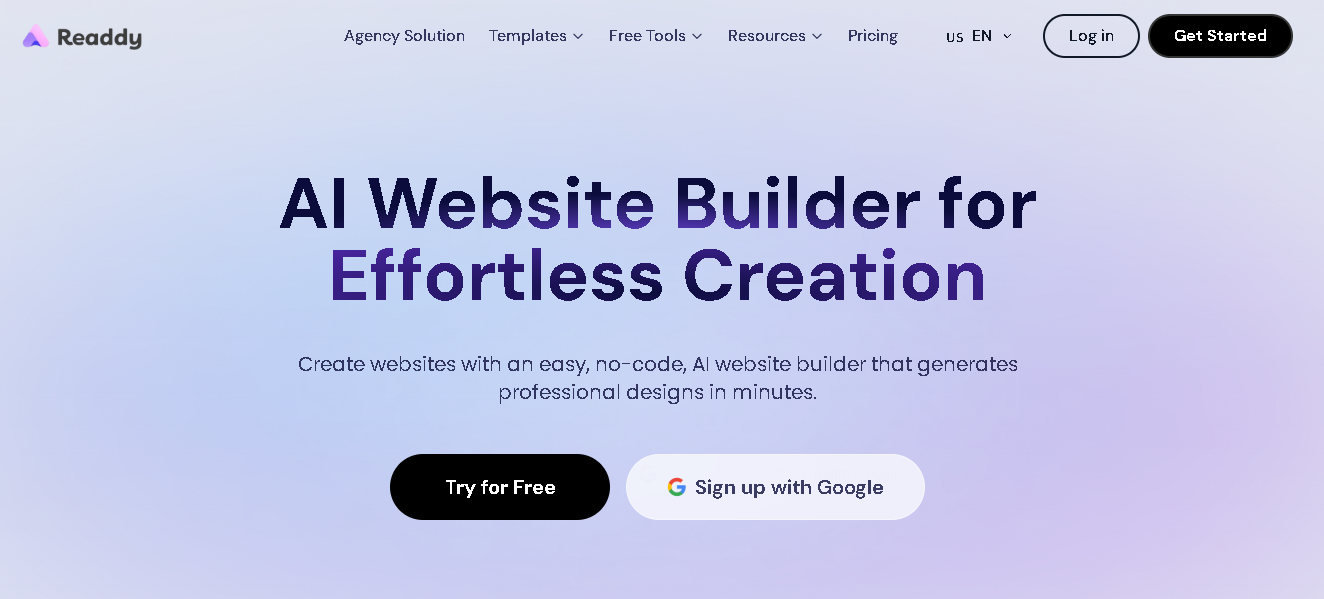
Rank tracking tells you where the opportunity is. Acting on it fast is the part most SEO workflows still get stuck on. This is where Readdy can help you. Readdy is an AI-powered website builder that helps you generate complete sites or landing pages from a single prompt in plain language. You describe what type of site or landing page you want and what to include in it, and Readdy generates it within minutes, including layout, copy, and images,
That means a keyword gap identified in your rank tracker can go from insight to a live page the same day instead of waiting for a developer to build it. Readdy's GEO Optimization feature structures generated pages with the headings, tables, and direct-answer formatting that AI search engines usually cite. This way, you publish pages and content that are structured for AI citation, not just Google ranking.
Readdy offers a free plan, so you can test the website builder before committing to a paid plan. Paid plans start at $15 a month on annual billing, with AI SEO Analysis and AEO/GEO tools available on the Agency tier and above.
FAQs
What is the best rank tracker?
SE Ranking is the best choice for most freelancers and small agencies as it offers the best combination of daily tracking, AI search visibility, and price. For larger teams already invested in Ahrefs or Semrush for keyword research and backlinks, their built-in rank trackers are good options, so they don’t have to add a separate tool.
Is Google Search Console enough?
If you manage a single small website and don't need daily tracking or competitor tracking, Search Console alone can work. It doesn't track competitor rankings, keywords you don't yet rank for, or AI search citations, so most businesses use it with a paid tracker. Search Console reports average position over a date range rather than live daily updates, which is also one of the main reasons many businesses and freelancers also use a paid tracker.
What features matter most?
Update frequency, tracking accuracy, local or mobile tracking if that applies to your business, and AI search visibility tracking and pricing are the most important features to look for when choosing rank trackers or keyword rank tracking software.
Do rank trackers work for AI search?
Yes, many do, including SE Ranking, Ahrefs' Brand Radar, Semrush's AI Visibility Toolkit, Nightwatch, and Local Falcon. These tools cover AI platforms like ChatGPT, Gemini, Perplexity, and Google AI Overviews, alongside traditional Google and Bing rankings.
Can Readdy help with SEO execution?
Yes. Readdy doesn't track rankings, but it generates and publishes the pages your rank tracker tells you to build, with built-in SEO fields and GEO-structured formatting designed for AI citation.
Final verdict
In 2026, it’s important to choose a rank tracker that includes both traditional rank tracking and AI visibility. Here's the summary of the best tools for different use cases and business types:
- Best Overall: SE Ranking
- Best for agencies: Nightwatch
- Best for keyword accuracy: AccuRanker
- Best for local SEO: Local Falcon
- Best for beginners and SMBs: Mangools (SERPWatcher)
- Best for enterprise and data teams: Semrush
Want to quickly create a live page from the keyword gap your rank tracker identified? Sign up for Readdy and get started today!
Kael
Kael is an editor and content strategist covering AI tools, website creation, and online growth. Interested in how people build and share on the internet, Kael writes practical content around digital products and modern web experiences.