







Lovable vs Readdy (2026): Which AI Builder Actually Wins for Your Use Case?
Lovable vs Readdy: See how the Lovable AI builder stacks up against Readdy in features, pricing, and ease of use. Find out which one actually fits your needs.
Frank is the founder of Readdy.ai. A developer-turned-founder with 10+ years of product experience, Frank loves great design, and he's building the tools he wishes he had when launching his first startup.
If you've spent any time researching AI tools to build a site or web app this year, you've probably come across both Lovable and Readdy. They're both AI-powered, both require no traditional coding knowledge, and both promise to get your website live within minutes. But they are built for different goals, and choosing the wrong one could cost you time and money.
This article compares Lovable vs Readdy in detail. We looked at what each tool does, where each one falls short, how the pricing stacks up, and which type of builder makes more sense depending on what you're trying to launch.
Lovable vs Readdy 2026 – Quick Answer
Lovable is an AI app builder that generates full-stack web applications with real databases, user authentication, and backend logic. It's built for developers and technical founders who want to skip setup and go straight to building.
Readdy is an AI website builder that creates complete, publishable websites from text, screenshots, URLs, or templates, with no code and no developer experience required. It's a no-code AI website builder built for business owners, marketers, and anyone who wants a live site without a steep learning curve.
If you need a production-ready business website, an event page, or a marketing landing page, Readdy is the more direct path. If you're building a web application with logins, databases, and dynamic user functionality, Lovable is worth a look.
What Is Lovable, and What Can It Actually Build?
Alt Text: Lovable AI app builder dashboard displaying the main prompt interface with a colorful gradient background and a text field prompting users to describe what they want to build
The Lovable AI builder started as a project called GPT Engineer, an open-source tool that went viral on GitHub. The team, led by founder Anton Osika in Sweden, rebranded to Lovable in late 2024 to target a broader audience aside from developers.
How it works is that you describe an application in plain language, and Lovable generates the entire codebase, frontend, backend, database, and authentication in one session. It runs on React and TypeScript with Tailwind CSS for styling, and it integrates directly with Supabase for database management and user auth. The platform also syncs with GitHub, so you can pull the code into your own environment anytime.
In February 2026, Lovable released version 2.0, which added real-time collaboration for up to 20 users, a new Chat Mode for planning features without generating code, and a visual editing feature that lets you make layout changes by clicking directly on elements.
The typical use case for Lovable is an MVP, a minimum viable product. Founders use it to validate ideas quickly. It can spin up a client portal, a simple SaaS dashboard, or a booking system prototype in a few hours. For that specific job, it's impressive.
The credit system is also a known pain point. Every prompt, edit, and debugging request costs credits. The free plan gives you 5 credits per day, enough to run about three prompts before you're locked out until the next morning. Users regularly report burning through 60 to 150 credits on a single stubborn bug, sometimes without resolving it. The AI can get stuck in a loop of fixing one thing, breaking another, and consuming credits each time. For users without a technical background, this loop can be incredibly frustrating.
What Is Readdy, and Where Does It Specialize?
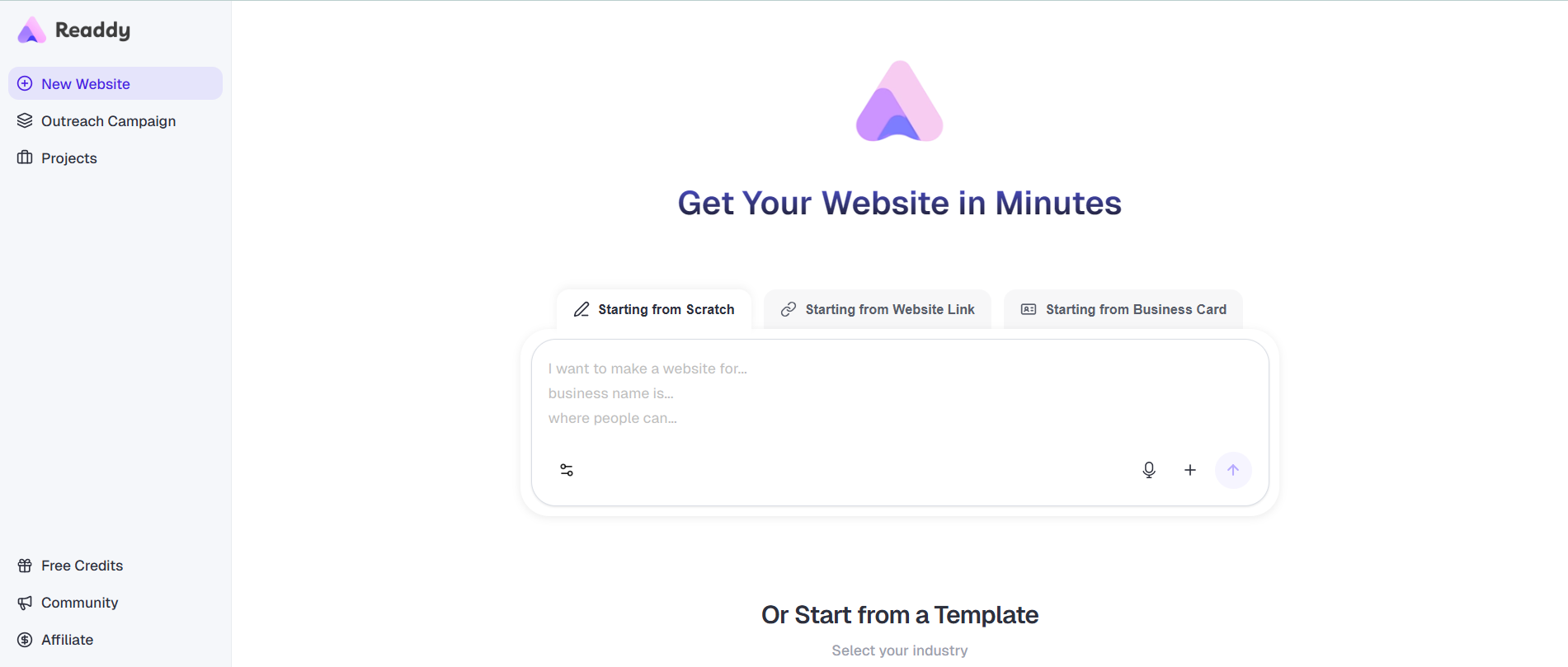
Readdy is an AI-powered website builder founded by Frank Zhu, a developer with over a decade of product experience. The platform has scaled to more than 500,000 users worldwide, which reflects how fast it's gaining ground as the best AI website builder for non-technical users.
You describe your business or project in plain language, and Readdy generates a full multi-page website with layout, copy, images, and structure already in place. Everything is responsive by default. From there, you edit using the visual editor or by using text to prompt the AI on what to do without touching a single line of code.
What sets Readdy apart from general builders is its range of starting points. You can build a website from text with AI, upload a screenshot to replicate a layout you like, or convert a website link into an editable project by pasting the URL. Readdy will analyze the structure and design logic of the reference site and produce a new version tailored to your brand.
The platform also covers event management use cases well. Readdy event management landing pages can be integrated with Calendly for appointment booking, Stripe for ticket payments, and Mailchimp for follow-up email campaigns. They're available through simple integrations that require no backend configuration.
Other notable features include:
- Built-in SEO tools with meta titles, descriptions, sitemap controls, and URL management
- A built-in CRM for storing leads and form submissions
- User authentication for member portals or gated content
- Multi-framework code export (React, Vue, HTML/CSS) for teams that want to hand off to developers later
- Figma export to preserve layouts and typography for design teams
For anyone who needs a production-ready website generator without writing code or hiring a developer, Readdy covers the full journey from generation to publishing, hosting, SSL, and domain connection included.
Lovable vs Readdy: Side-by-Side Comparison
| Feature | Lovable | Readdy |
| Tool type | AI website builder | AI website builder |
| Technical skill required | None | None |
| Event management depth | Basic | Srong |
| Pricing model | Credit-based | Credit-based |
| Free plan | Yes – 5 daily credits, capped at 30 credits/month | Yes – 250 credits/month, 2 projects |
| Paid plans cost | Starting at $25/month | Starting at $15/month (billed annually) |
| Setup time | 10 to 30 minutes | Under 15 minutes |
| Integration | Supabase, Stripe, GitHub, Gemini, Google, Microsoft, and more | Calendly, Mailchimp, Stripe, Analytics, Supabase, Shopify, and more |
Building with Lovable: The AI-First Approach
Lovable is an impressive AI builder that creates full-stack, AI-powered websites and functional web applications from simple text prompts. You type what you want, and a full website starts to take shape. For someone building a product prototype or validating an idea quickly, that's genuinely valuable.
The experience starts with writing a prompt. For instance, if you want an event registration page with a sign-up form, a countdown timer, and a payment option via Stripe. Lovable can generate all of that. The website it produces is clean, modern, and uses a proper tech stack.
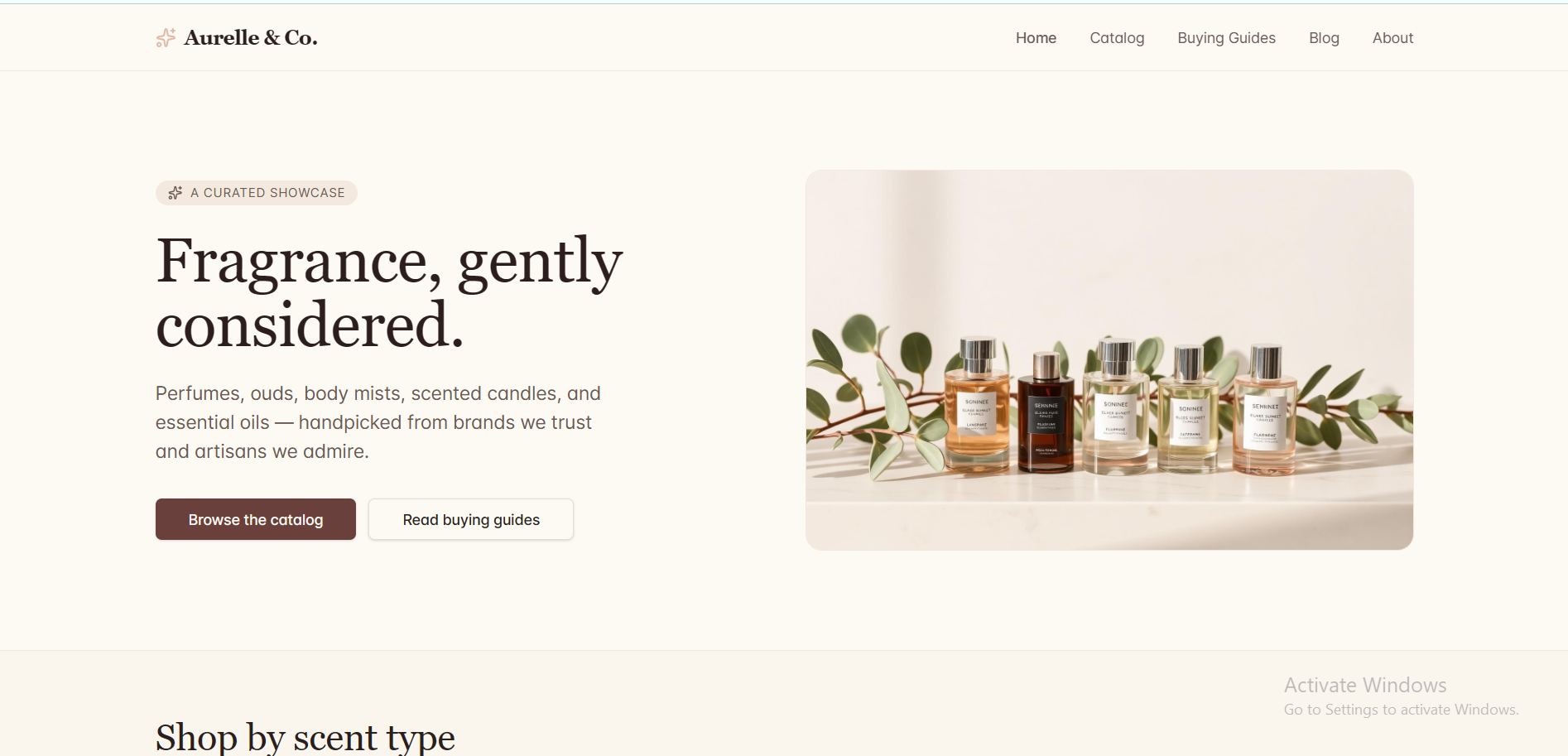
However, once you have the initial output, any changes you want require new prompts, and each prompt costs credits. If the AI misunderstands your request or breaks something it just fixed, you're spending more. For complex builds, that cycle repeats more than you'd expect. Community feedback consistently points to credit burn as the biggest frustration with the platform.
There's also the question of ongoing maintenance. Lovable outputs code, which means the site lives in a codebase. If you're not a developer, editing that codebase yourself is risky. You can ask the AI to make changes, but again, that costs credits. You're somewhat dependent on the platform's AI to manage what it created.
In short, Lovable is best for people who want to build actual websites quickly for their e-commerce business, professional online portfolios, blogs, and more. The product is well-made. The issue is that it's often overkill for what most small business owners and event organizers actually need.
Using Readdy: The Specialist's Advantage
Readdy approaches the problem from the opposite direction. Instead of generating code and hoping the output meets your needs, it focuses on producing a ready-to-publish website with real business utility, fast.
A typical session starts with a short description. Something like: "Create a conference website for a two-day tech event with a schedule page, speaker bios, and a registration form." Readdy generates a multi-page site in under a minute. The layout follows recognized conversion principles, clear hierarchy, logical section flow, and visible calls to action. The copy is rough but usable. From there, you click any element to edit it, rearrange sections by dragging, and adjust the color palette to match your brand.
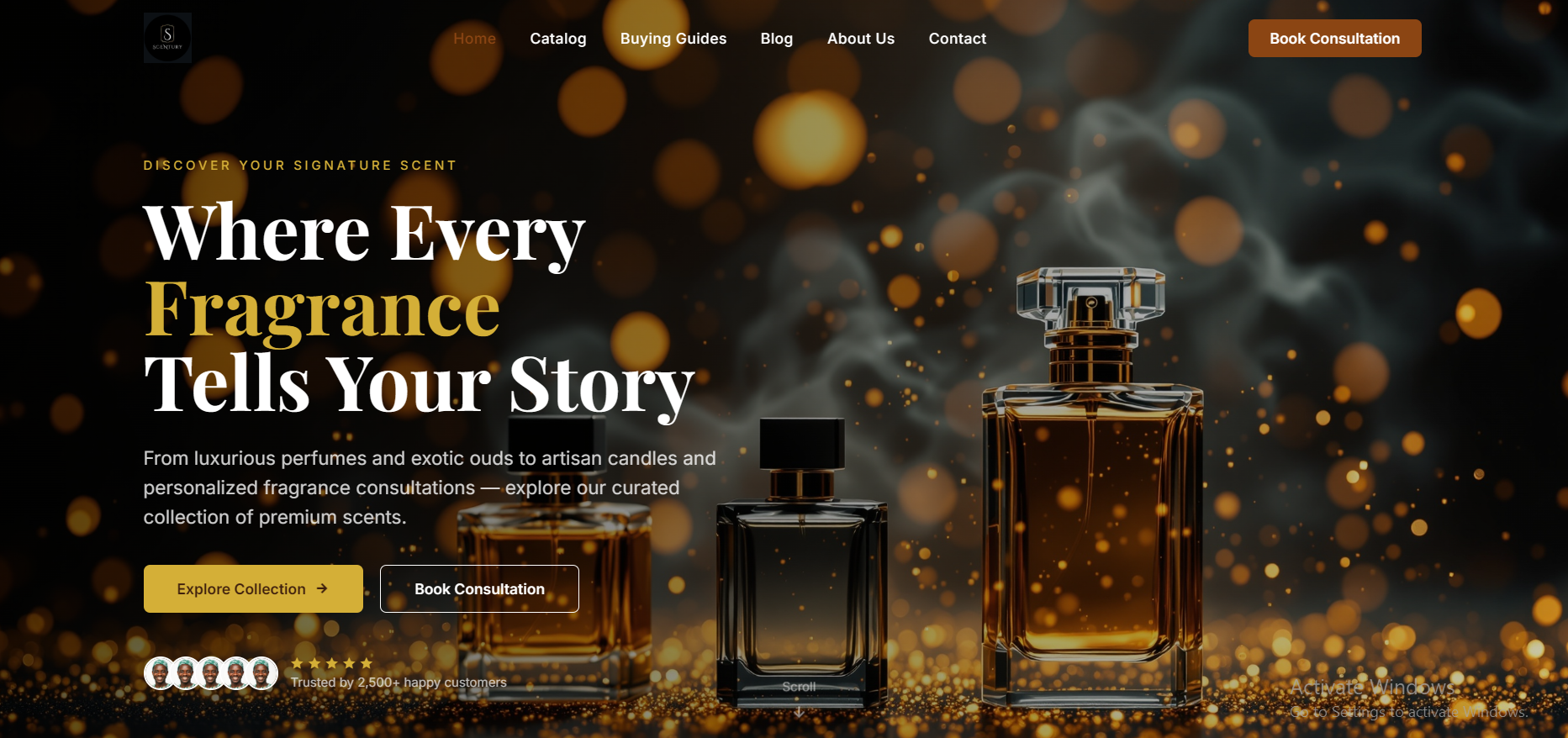
The ability to build a website from a screenshot is one of Readdy's most practical features. If you have a design reference, a competitor's homepage, a concept mockup, or even a Figma frame, you upload it, and Readdy generates a structurally similar layout in your own brand style. This is especially useful for agencies working on client sites with tight timelines, or founders who know what they want but can't explain it in words.
The URL cloning feature works in a similar way. Paste any website link, and Readdy reverse-engineers the structure, design logic, and UX patterns into a fresh site you can customize. This makes it one of the few tools that can genuinely convert a website link into an editable project without writing any code.
As an AI website builder for events, Readdy's integrations make it particularly strong. You can embed Calendly for booking, connect Stripe for ticket sales, and link Mailchimp for event marketing, all within the visual editor, without building any backend logic yourself. Readdy's event-specific templates handle registration forms, speaker listings, schedule pages, and countdown sections out of the box.
The built-in SEO layer is also something Lovable doesn't match. Readdy manages meta titles, descriptions, URL structure, sitemap generation, and image compression automatically. For small business owners who want their site to show up in search results, this matters a lot.
Pricing Compared: What You'll Actually Pay in 2026
Both tools use a credit model, but the way credits behave is very different.
Lovable Pricing:
- Free: 5 daily credits (roughly 3 prompts), public projects only
- Pro: $25/month, offers 100 monthly credits, enough for 5 to 6 small projects per month
- Business: $50/month, for users building frequently, higher credit volumes, private projects, GitHub export
- Enterprise: Custom pricing
The main issue with Lovable's pricing is the unpredictability. Complex features use more credits than simple ones. A basic UI change costs around 0.5 credits. Adding user authentication costs around 1.2 credits. But debugging cycles can consume 20 to 30 credits with no guaranteed resolution. If you run out mid-project, you either wait until the next billing cycle or upgrade. There's no pay-as-you-go option.
Readdy Pricing:
- Free: 250 credits/month, up to 2 projects
- Starter: $15/month (billed annually), 30,000 credits delivered upfront each year, 10 projects, custom domain, code/Figma export, no Readdy branding
- Pro: $24/month (billed annually), 72,000 credits delivered upfront each year, unlimited projects, expanded lead collection
- Agency: From $149/month. Custom tiers for high-volume teams
Readdy offers multi-year plans with savings that include 50% off for the two-year plan and 60% off for the three-year plan. These plans are paid for upfront, and you receive your credits yearly. They also include a flexible cycle reset, which lets you start next year's credit allowance early if you finish the current year faster than expected.
Readdy's free plan is more generous for someone who wants to explore the tool before committing. 250 monthly credits give you room to generate and refine a complete site. The Starter plan at $15/month is also cheaper than Lovable's comparable tier and covers the core features most business owners actually need: a custom domain, code export, and branding removal.
For small businesses and freelancers, Readdy's pricing structure is easier to plan around. You're not burning credits on AI debugging loops. Each generation and edit costs a fixed number of credits, so your monthly spend stays predictable.
Who Should Use Lovable, and Who Should Stick with Readdy
Lovable makes sense if you:
- Are building a web application (think client portals, SaaS tools, internal dashboards)
- Have some technical comfort and can read or guide the generated code
- Want GitHub integration and full code ownership from day one
- Need a working prototype to show investors or stakeholders quickly
- Are you validating an idea before committing to a full development team
Readdy is the better fit if you:
- Need a live business website within a day, not a week
- Run a small business, service company, or event-based organization
- Want to build a website with AI without learning any technical tools
- Need an AI website builder for events with built-in registration, booking, and payment integrations
- Are you a marketer or agency producing sites for clients at speed
- Want built-in SEO management from the start
In summary, Readdy was designed from the ground up for people who do not write code, do not know CSS, and do not want to spend three hours on a Saturday reading documentation. You describe what you need, the AI builds it, and you publish it.
Lovable AI builder is impressive and accessible compared to writing code manually, but it still assumes a baseline of technical comfort that many small business owners and event organizers do not have.
The Verdict: Lovable vs Readdy in 2026
The Lovable vs Readdy comparison isn't really about which tool is better in absolute terms. It's about which one is right for what you're actually trying to do.
Lovable is a powerful tool for building web applications with real technical depth. It generates real, maintainable code. It connects to real databases. It handles auth and payments in ways that would take a developer days to configure manually. For founders who are testing product ideas or building MVPs, it is worth every credit.
Readdy, on the other hand, is purpose-built for producing websites. It covers the full stack of what a business website needs: design, content, SEO, hosting, integrations, and domain connection, with none of the technical overhead. The ability to start from a text prompt, a screenshot, or a URL reference makes it one of the most accessible AI website generators available right now. For small business owners, marketers, agencies, and anyone planning events, Readdy offers the fastest path to having a live, professional site.
Both platforms have a free tier, so you can try them both out at no cost to see which works best for you. But if you're planning an event, running a service business, or need a production-ready website generator that works without a technical background, Readdy is where you'll find the most value the fastest.
Frequently Asked Questions
Is Lovable free to use?
Yes. Lovable has a free plan with 5 daily credits and no credit card required. Public projects are available on the free tier, along with GitHub integration and up to 20 collaborators. That said, 5 daily credits run out in about 3 prompts, making it hard to build anything substantial without upgrading to a paid plan.
Can Lovable build an event registration page?
Lovable can generate a registration form and connect a payment system, but it requires prompting the AI through multiple steps to set up the backend, handle form submissions, and integrate tools like Stripe. For users without technical experience, this process can take longer than expected and may consume a significant number of credits. It's doable, but it's not the smoothest path to a finished event page.
What is Readdy best used for?
Readdy is best used for creating complete business websites quickly, including landing pages, service sites, portfolios, event pages, and small business sites. It's also one of the strongest AI website builders for beginners because the entire process from generation to publishing stays in one place, with no coding, hosting configuration, or technical setup required.
Is Lovable better than Readdy for small businesses?
For most small businesses, Readdy is the more practical choice. It covers the features a small business site actually needs, including SEO, custom domain, booking integrations, lead capture, and mobile responsiveness, without requiring the user to understand code. Lovable's strengths are in application development, which most small businesses don't need.
Can I use Lovable and Readdy together?
In theory, yes. Some teams use Readdy to build and publish their main website, then use Lovable separately to build internal tools or web apps to use alongside it. They serve different purposes, so there's no overlap that forces you to choose one and abandon the other.
Which is easier to use for non-technical users?
Readdy is significantly easier. It's designed from the ground up for users with no coding background. The visual editor is intuitive, the AI responds well to plain language, and the path from idea to published site takes minutes rather than hours. Lovable, despite its no-code positioning, produces code that often requires debugging and iteration, which requires some technical understanding. As a no-code AI website builder, Readdy is the clearer choice for non-technical users.

Frank Zhu
Frank is the founder of Readdy.ai. A developer-turned-founder with 10+ years of product experience, Frank loves great design, and he's building the tools he wishes he had when launching his first startup.