How to build a website with AI in 2026
Learn how to build a website with AI in 2026, from writing the right prompt to editing, publishing, SEO setup, and improving your site after launch.

Frank Zhu
Frank is the founder of Readdy.ai. A developer-turned-founder with 10+ years of product experience, Frank loves great design, and he's building the tools he wishes he had when launching his first startup.
Creating a professional website no longer has to start with a blank page, a complex theme library, or a long development plan. In 2026, AI website builders can help you turn a business idea, product concept, portfolio, or campaign brief into a working website much faster than traditional setup methods.
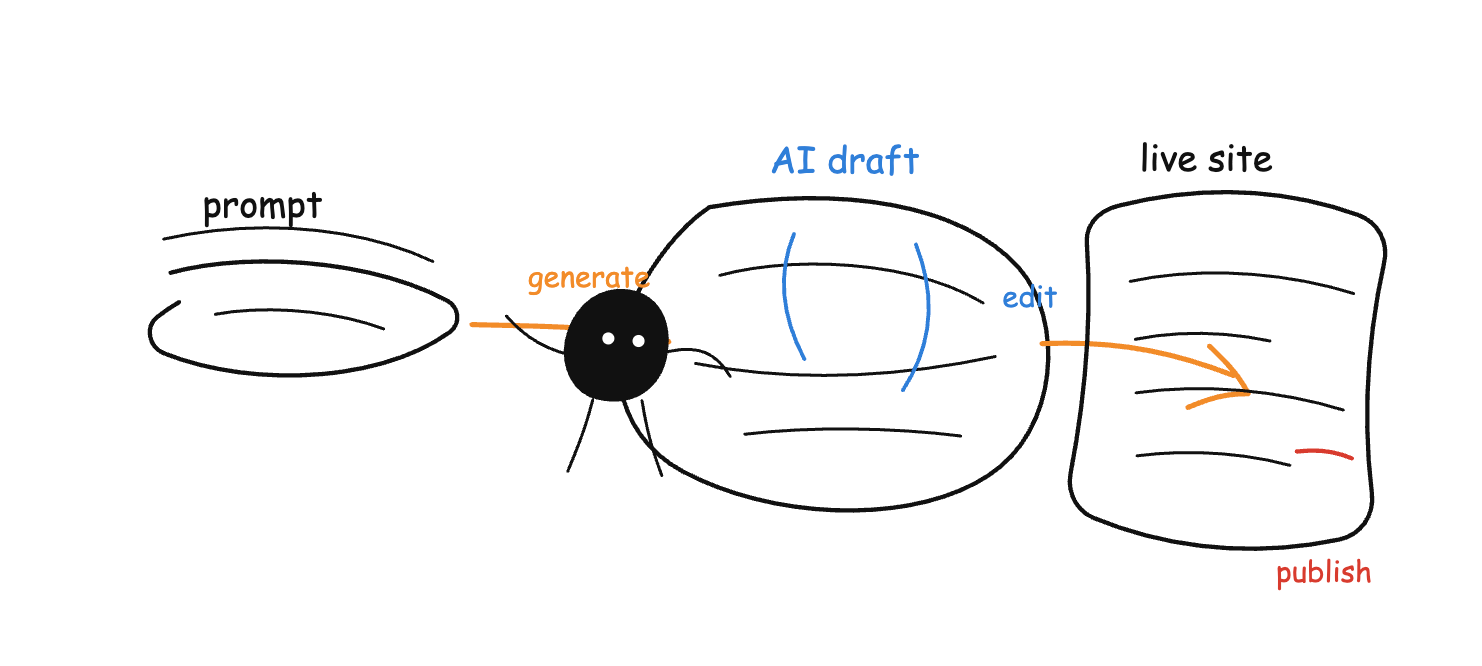
An AI website builder is a platform that uses artificial intelligence to generate website structure, page layouts, copy, images, and design direction from your instructions. Instead of building every section manually, you describe what you need, review the first version, then refine the site with edits.
This guide explains how to build a website with AI from the first prompt to a live site. It uses Readdy as a practical example because Readdy is an AI website builder that combines AI generation, AI editing, backend capabilities, hosting, and publishing in one workflow.
By the end, you will know how to:
- Write a useful website prompt
- Generate a first version of your site
- Customize design, content, pages, and features
- Prepare the site for SEO and launch
- Choose an AI website builder based on your real needs
Why build a website with AI?
Building a website used to involve several separate steps: choosing a platform, selecting a template, writing copy, adjusting layouts, sourcing images, setting up hosting, and learning how to publish. That process can still work, but it often takes time that small businesses, founders, creators, and marketers do not have.
AI website builders reduce the amount of manual setup required. They can create a structured first draft of your site based on your business type, audience, style preferences, and goals. You still make the final decisions, but you start with something concrete instead of a blank canvas.
The main benefits are practical:
- Faster setup: AI can generate pages, sections, headlines, and design direction in minutes.
- Lower technical barrier: You can describe what you want in plain language instead of writing code.
- Better starting structure: Many AI builders create common website sections such as hero areas, service pages, contact forms, testimonials, and calls to action.
- Easier iteration: You can update copy, layout, images, and page sections without rebuilding from scratch.
- More accessible publishing: Platforms such as Readdy include hosting and domain workflows, so users can move from creation to launch in one place.
AI does not remove the need for judgment. You still need to review your message, check accuracy, test forms, confirm mobile layout, and make sure the website reflects your brand. The advantage is that AI handles much of the production work, so you can spend more time improving the final result.
Traditional website builders vs. AI website builders
Traditional website builders usually rely on templates, drag-and-drop editing, and manual setup. They give you control, but they often require you to decide where every section goes, how each page should be structured, and what content belongs on the site.
AI website builders start from a different workflow. You provide a prompt that explains your business, audience, goals, and preferred style. The platform then creates an initial website draft that you can edit.
Drag-and-drop setup
Drag-and-drop tools are useful when you already know what you want to build. They work well for users who want direct control over layout and are comfortable making design decisions.
The challenge is that many beginners do not know which sections they need, how to write conversion-focused copy, or how to create a mobile-friendly page structure. The tool gives them flexibility, but it does not always give them direction.
AI-assisted setup
AI website builders give you a more guided starting point. You can describe your business in normal language, such as:
Create a website for a boutique fitness studio in Austin that offers personal training, small group classes, and nutrition coaching. The tone should be energetic but professional, with clear calls to action for booking a consultation.
From there, the AI can generate a homepage structure, service sections, suggested copy, and visual direction. You then refine the result instead of building every piece manually.
What AI does well
AI is especially helpful for:
- Turning rough ideas into structured pages
- Creating first-draft copy
- Suggesting section order
- Matching design direction to an industry or use case
- Producing quick variations for headlines, CTAs, and page sections
- Helping non-technical users move faster
What you should still review
Before publishing, review:
- Business details, offers, pricing, and contact information
- Claims about results, certifications, services, and guarantees
- Mobile layout and page speed
- Form submissions and booking flows
- SEO titles, meta descriptions, headings, and image alt text
- Legal pages, privacy policies, and terms where needed
AI can produce a strong first version, but the final website should still be checked by a human who understands the business.
Step-by-step guide: How to build a website with AI
The exact interface will vary by platform, but most AI website-building workflows follow the same core process.
Step 1: Define the website goal
Before you open an AI website builder, decide what the website needs to accomplish. A clear goal helps the AI generate a more relevant structure.
Common website goals include:
- Getting local service inquiries
- Selling products online
- Promoting an event
- Collecting email signups
- Showcasing a portfolio
- Booking appointments
- Launching a startup landing page
- Publishing a blog or resource hub
For example, a restaurant website needs menus, location details, hours, reservation options, and strong mobile usability. A SaaS landing page needs a clear value proposition, product screenshots, benefits, pricing, social proof, and a clear signup path.
The more specific your goal is, the better your first AI-generated draft will be.
Step 2: Write a strong AI website prompt
Your prompt is the brief that guides the website. A weak prompt creates a generic site. A specific prompt gives the AI enough context to create something useful.
Include these details:
- Business or project name
- Industry or niche
- Target audience
- Main products or services
- Desired tone
- Preferred visual style
- Important pages
- Primary call to action
- Location, if relevant
- Any brand colors, keywords, or examples
Here is a stronger prompt:
Build a professional website for Greenline Dental, a family dental clinic in Denver. The audience is adults and parents looking for preventive care, cosmetic dentistry, and emergency appointments. Use a calm, trustworthy tone with a clean modern design, soft green accents, and clear booking CTAs. Include a homepage, services page, about page, patient resources, and contact page.
This gives the AI enough information to generate a site that fits the business instead of a generic healthcare template.
Step 3: Generate the first version
Once you enter your prompt, the AI builder creates the first draft. Depending on the platform, this may include:
- Page structure
- Homepage sections
- Navigation
- Headlines and body copy
- Images or image suggestions
- Color palette
- Font pairings
- Contact forms
- Calls to action
- Mobile-responsive layouts
In Readdy, users can generate a website from text, templates, screenshots, images, Figma frames, or a reference URL. This gives you several starting points, depending on whether you already have a design direction or only a rough idea.
At this stage, do not expect the first version to be final. Treat it as a strong draft. Your job is to review whether the structure, message, and user journey make sense.
Step 4: Review the site structure
Before editing colors or images, check the structure. A beautiful website will not help if visitors cannot understand what you offer or what to do next.
Review these areas:
- Navigation: Is it simple and clear?
- Hero section: Does it explain who you help and what you offer?
- Page order: Do sections move from problem to solution to proof to action?
- CTA placement: Can visitors easily contact you, book, buy, or sign up?
- Trust signals: Are testimonials, reviews, case studies, credentials, or portfolio examples included where relevant?
- Mobile layout: Is the most important information easy to scan on a phone?
This is where AI-assisted editing can save time. In Readdy, users can edit by asking the AI or by clicking an element directly. For example, you can ask the AI to make a hero section more concise, add a pricing section, rewrite the CTA, or adjust the visual direction.
Step 5: Customize copy, images, and brand details
AI-generated copy should be reviewed carefully. It can give you a useful starting point, but it may not know your exact offers, policies, process, or customer language.
Update:
- Business name and tagline
- Service descriptions
- Product details
- Pricing language
- Contact information
- Location details
- Team bios
- Brand voice
- Testimonials or proof points
- Legal or compliance-sensitive wording
Then review visual elements:
- Replace generic images with real product, team, portfolio, or location images where possible.
- Make sure colors match your brand.
- Check whether icons and section graphics support the message.
- Confirm that images are sharp and useful on mobile.
For many businesses, real visuals create more trust than generic stock-style imagery. If you do not have original photos yet, use the AI-generated version as a temporary draft and plan to replace key images later.
Step 6: Add the features your website needs
Different websites need different functionality. A simple portfolio may only need pages and a contact form. A service business may need bookings. A startup may need a waitlist. An online store may need product pages, payments, and order flows.
Common website features include:
- Contact forms
- Appointment booking
- Payment collection
- Product catalogs
- User accounts
- Email signup forms
- Blog or resource pages
- Analytics
- SEO settings
- Database-backed content
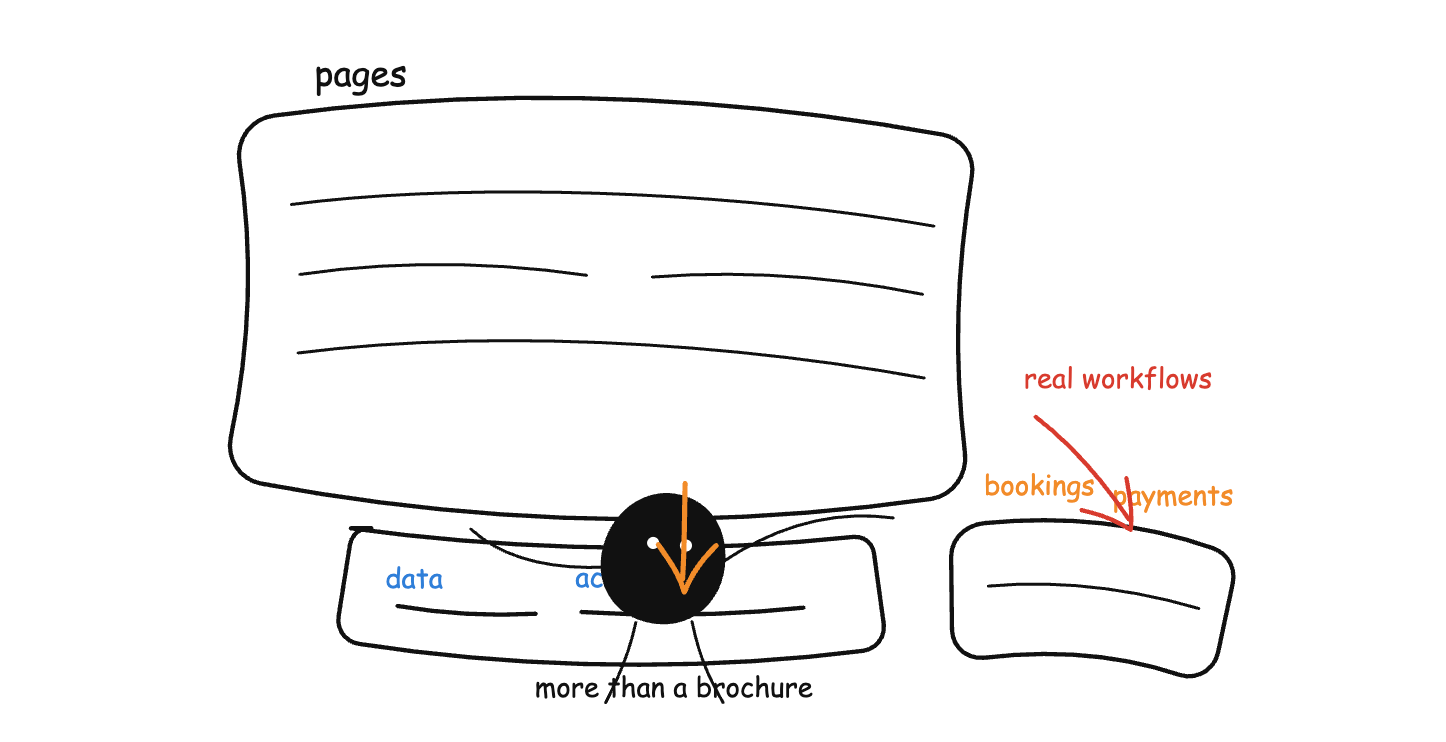
This is one area where AI website builders differ. Some tools focus mainly on static pages. Others, including Readdy, provide built-in backend capabilities such as databases, authentication, storage, and server functions, along with publishing workflows. That can be useful when your site needs more than a brochure page.
Choose features based on the visitor journey. Do not add tools just because they are available. Every feature should help a visitor take the next step.
Step 7: Set up basic SEO before publishing
AI can help draft SEO elements, but you should still review them before launch. Basic SEO setup helps search engines understand your pages and improves how your site appears in search results.
Check these items:
- Each page has one clear H1.
- SEO titles are specific and not too vague.
- Meta descriptions explain the page clearly.
- URLs are short and readable.
- Images have descriptive alt text.
- Pages link to related pages where useful.
- Local businesses include location details.
- Contact information is accurate and easy to find.
- Important pages are not hidden from navigation.
For AI and answer-engine visibility, make definitions and core information clear. For example, a local service page should plainly state what the business does, where it operates, who it serves, and how customers can contact or book.
Readdy includes SEO and GEO tools that can help users review and improve site content, including structured guidance for search and AI systems. Still, your business details and claims should be checked manually before publishing.
Step 8: Test the site before launch
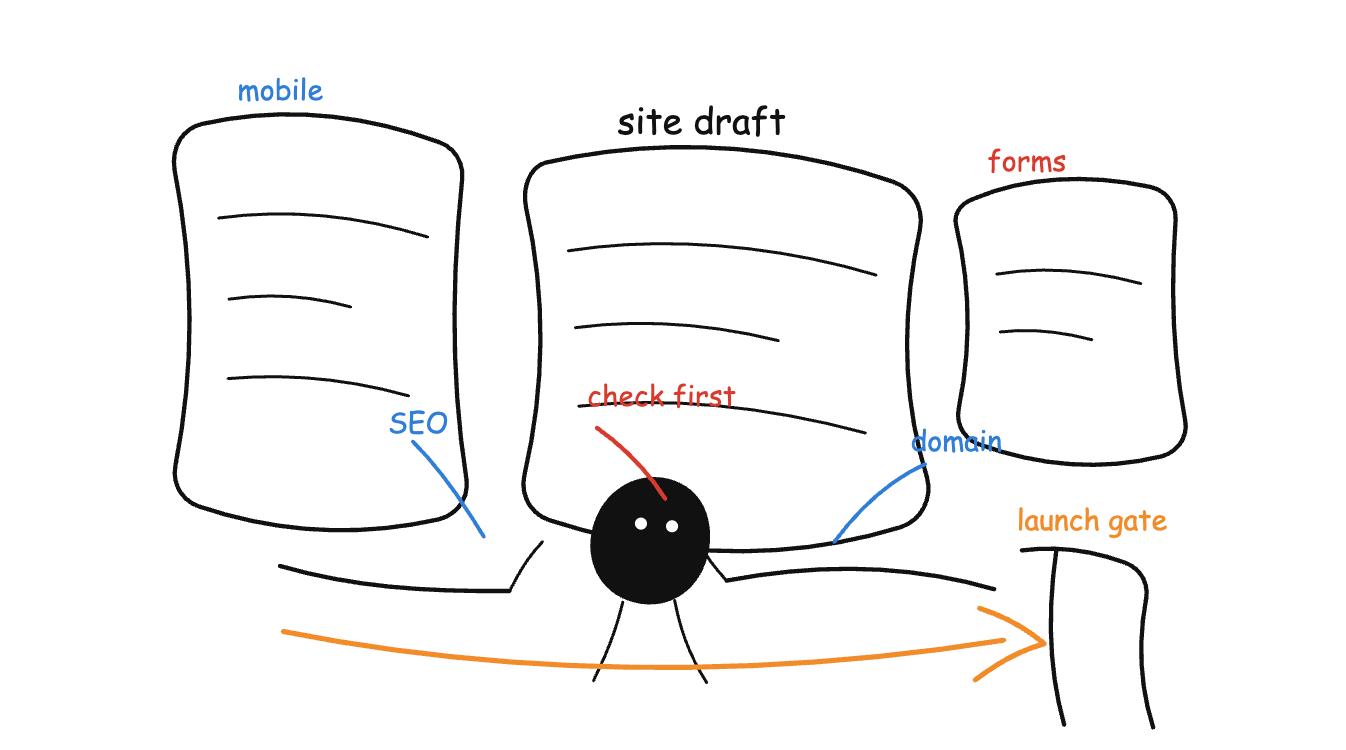
Before connecting a domain or sharing the site, test the experience like a visitor.
Use this quick launch checklist:
- Open the site on desktop and mobile.
- Click every navigation item.
- Test each form, booking link, payment link, or signup flow.
- Check spelling, grammar, and factual accuracy.
- Confirm that contact information is correct.
- Make sure CTAs are visible and specific.
- Review page loading and image quality.
- Check that social links and external links work.
- Review privacy, terms, or compliance pages if needed.
This step matters because AI can help you build faster, but it cannot know every operational detail of your business.
Step 9: Publish and keep improving
Once the site is ready, publish it and connect your domain. After launch, watch how visitors use the site and keep improving it over time.
Useful post-launch tasks include:
- Add new testimonials or case studies.
- Improve pages that are not converting.
- Test different CTAs.
- Publish helpful blog posts or resources.
- Update product, service, or pricing details.
- Add new pages for campaigns or locations.
- Review analytics to understand traffic sources and visitor behavior.
The best AI website workflow is not only "generate and publish." It is "generate, review, publish, learn, and improve." Readdy supports this kind of workflow by letting users continue editing pages with AI after the first version is created.
Tips for getting better results from an AI website builder
Be specific with your prompt
Give the AI real context. Instead of asking for "a modern website," describe the business, audience, offer, style, and goal.
Better prompt:
Create a landing page for a virtual bookkeeping service for small e-commerce brands. The page should feel professional and practical, explain monthly bookkeeping packages, include a lead form, and use a confident but approachable tone.
Review the message before the design
Design matters, but the message matters first. Visitors need to understand what you do, who it is for, and why they should trust you.
Before changing colors or fonts, check:
- Is the offer clear?
- Is the audience clear?
- Is the CTA specific?
- Does the page explain the main benefit?
- Is there enough trust-building information?
Use templates as a starting point, not a final answer
Templates can save time, especially when they match your industry or use case. But a website should still reflect your business. Replace generic copy, update visuals, and adjust sections based on what your customers need to know.
Keep iterating after launch
AI makes iteration easier, so use that advantage. Launch a strong version, gather feedback, and improve the site as your business changes.
Small updates can make a real difference:
- Rewrite a confusing headline.
- Add a stronger CTA.
- Replace a generic image.
- Add an FAQ based on customer questions.
- Improve a page title for search clarity.
Choosing the right AI website builder
The right AI website builder depends on what you need the site to do.
| Platform | Best fit | Notes |
|---|---|---|
| Readdy | Users who want AI generation, visual editing, publishing, and built-in functionality in one workflow | Supports AI-assisted creation and editing, hosting, backend capabilities, SEO/GEO tools, bookings, payments, analytics, and more |
| Wix AI | Users who want AI assistance inside a broader drag-and-drop website builder | Useful for people who want automation but still prefer manual control in an established builder |
| Hostinger AI Builder | Users who want hosting and AI-assisted site creation in one provider workflow | Offers AI generation with website and app-building options, depending on mode and plan |
| Durable | Users who want a fast first draft for a simple business website | Often considered for quick launch needs, especially for service businesses |
| v0 | Developers and technical teams creating interface prototypes or app frontends | Better suited to technical users than beginners who want a full no-code website workflow |
When comparing tools, look beyond speed. Ask:
- Can I edit the site easily after generation?
- Does it support the pages and features I need?
- Can I connect a custom domain?
- Does it include hosting?
- Can I add forms, bookings, payments, or user accounts if needed?
- Does it help with SEO?
- Can I export or customize code if my needs grow?
- Is the pricing clear for the features I need?
Avoid choosing a platform based only on the fastest demo. The better choice is the one that fits your website goal, technical comfort level, and future maintenance needs.
Ready to build a website with AI?
AI website builders make it easier to move from an idea to a professional online presence. They can help you create pages, draft copy, explore design directions, and publish faster than traditional setup workflows.
The strongest results still come from a thoughtful process: define your goal, write a clear prompt, review the generated structure, customize the content, set up SEO basics, test the site, and keep improving after launch.
If you want an AI-native workflow, Readdy is one option designed for this full process. It helps users generate websites from prompts or visual references, edit with AI, add functional features, and publish from one platform.
Start with a focused prompt, review the first version carefully, and treat AI as a website-building assistant that helps you move faster while you stay in control of the final site.
Frequently asked questions
How long does it take to build a website with AI?
An AI website builder can create a first draft in minutes. The full process may take longer depending on how much you need to customize, review, test, and publish. A simple landing page can often be prepared quickly, while a business website with multiple pages, forms, SEO setup, and custom content needs more review time.
Is it free to build a website with AI?
Many AI website builders offer a free starting point, trial, or preview experience. Paid plans are usually required for features such as custom domains, higher usage limits, advanced functionality, or business tools. Check the current pricing page of the platform before publishing, since plans and limits can change.
Do I need coding skills to build a website with AI?
No. Most AI website builders are designed for non-technical users. You describe the website you want, then edit the generated result through prompts, visual controls, or both. Coding skills can still help if you want deeper customization, but they are not required for many standard business websites.
Can AI build a website from scratch?
Yes. AI website builders can generate a website from a prompt, and some can also use inputs such as screenshots, images, templates, Figma frames, or existing URLs. You should still review the generated website for accuracy, usability, branding, and legal or business-specific details before launch.
What should I include in an AI website prompt?
Include your business name, industry, target audience, main offer, desired tone, visual style, required pages, location, and primary call to action. The more specific your prompt is, the more useful the first draft will be.
What is the best AI website builder in 2026?
There is no single best AI website builder for every user. Readdy is a strong fit if you want AI generation, AI-assisted editing, hosting, publishing, and built-in functionality in one workflow. Wix AI may fit users who want AI support inside a traditional website builder. Hostinger AI Builder may fit users who want hosting and AI-assisted creation together. The best choice depends on your website goal, budget, technical comfort, and required features.
Frank Zhu
Frank is the founder of Readdy.ai. A developer-turned-founder with 10+ years of product experience, Frank loves great design, and he's building the tools he wishes he had when launching his first startup.